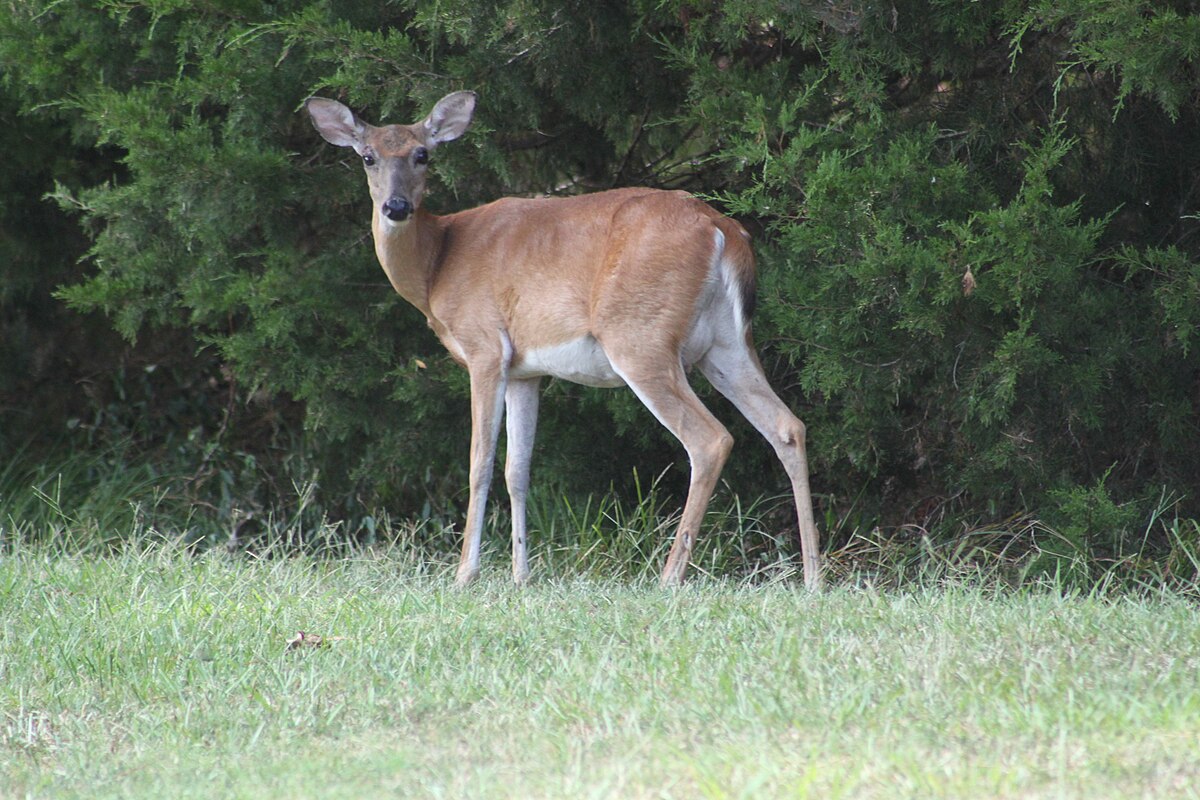
Where deer are concerned, there is both good news and bad news. The bad news is that very few plants are 100% deer-proof. The good news is that there are some plants that deer will only eat as a last resort.
In general, deer tend to avoid strongly scented plants like herbs, plants with thick or leathery leaves such as yucca, and thorny plants such as holly and thistle. Strangely enough, they don’t mind the thorns on rose bushes and will happily munch them to the ground.

Bear in mind though that fawns will sample everything as they learn which plants are most palatable, so expect some minor damage during May and June when most fawns are born. There are also regional differences in which plants deer eat and don’t eat. And, within the same geographic location, there can be differences in diet between herds of deer. The deer living in my neighborhood eat all of my lilies, but the deer in the next town don’t bother my friend’s lilies.
Larger, established plants such as trees and shrubs usually recover from mild browsing during the growing season. Plants that are lightly nibbled by deer during winter dormancy generally recover in the spring. When adding new plants to your garden, don’t take the word of the nursery from which you purchased them. Test their deer resistance yourself by putting them in your yard while still in their container for a few days before planting them in your garden to see if your local herd has a taste for them.
Sun Loving Plants That Deer Seldom Eat

For early springtime color, try bulbs like daffodils, hyacinths and Crown Imperials. A note of caution: don’t plant the Crown Imperials too close to your house. The bulbs have a very strong odor even underground. The odor is said to resemble fox, but to me it smells like skunk.
Later in the spring you can use old-fashioned favorites like bleeding heart, columbine, lily of the valley and foxglove. All of them come in multiple sizes and colors. Even the lily of the valley! You can get them in pink instead of the usual white, but beware, the pink ones are very pricey.
For color all summer long, annuals such as calendulas, marigolds, nasturtium, sweet alyssum and zinnias are good choices. All require full sun, which is defined as 6 to 8 hours per day. My personal favorite are zinnias because of the many choices of colors and sizes. There is a zinnia for every situation! And butterflies and hummingbirds love them.
For perennials, try peonies or rudbeckia (black-eyed Susans). If you like low-maintenance gardening, peonies are an excellent choice. They will live for up to fifty years with almost no care.

Shade Plants That Deer Seldom Eat
If you have a shady yard, don’t despair. Hostas may be deer candy but ferns are rarely eaten. There are many ferns to choose from ranging from the small but colorful Japanese Painted Fern all the way up to the elegantly tall Ostrich Fern. As an added bonus, ferns don’t mind a little dryness so you won’t need to water them every day.

If you want color, astilbe are seldom bothered by deer. These perennial plants prefer shade but unlike most shade plants which are grown for their colorful foliage, astilbe have colorful flowers that can be white, pink, red, or purple. The flowers are airy plumes that range in size from 1 to 4 feet tall, adding drama to that shady corner of your yard. Unlike ferns, astilbe like to be moist so water them regularly. Don’t let them dry out.

Ornamental Grasses That Deer Seldom Eat
Ornamental grasses are popular landscape plants and surprisingly, deer tend to stay away from them. The brightly colored Japanese Blood Grass is a popular choice. If you enjoying making dried flower arrangements, you will want to plant Northern Sea Oats. My personal experience has been that the dried flowers of the Northern Sea oats are lovely, but if left on the plants and allowed to go to seed, they will reseed aggressively throughout the garden.
Shrubs That Deer Seldom Eat

When it comes to shrubs, who doesn’t love lilacs? Deer, that’s who! They also avoid butterfly bushes, boxwood, forsythia and Rose of Sharon. And it’s a good thing because planting these will give you months of color starting with forsythia in the early spring, lilacs in the late spring, butterfly bushes during the summer and then Rose of Sharon in late summer. You have your choice of colors too. Here’s a fun fact about lilacs – the different color flowers (white, lavender, red) all smell differently.
Your local extension office can provide you with a comprehensive list of flowers, herbs, shrubs and trees rated for deer resistance in your area. The ratings will tell you which plants deer love, which plants are second choices for them and which plants are off their menu except during times when there is no other food available to them.
Leave a Reply