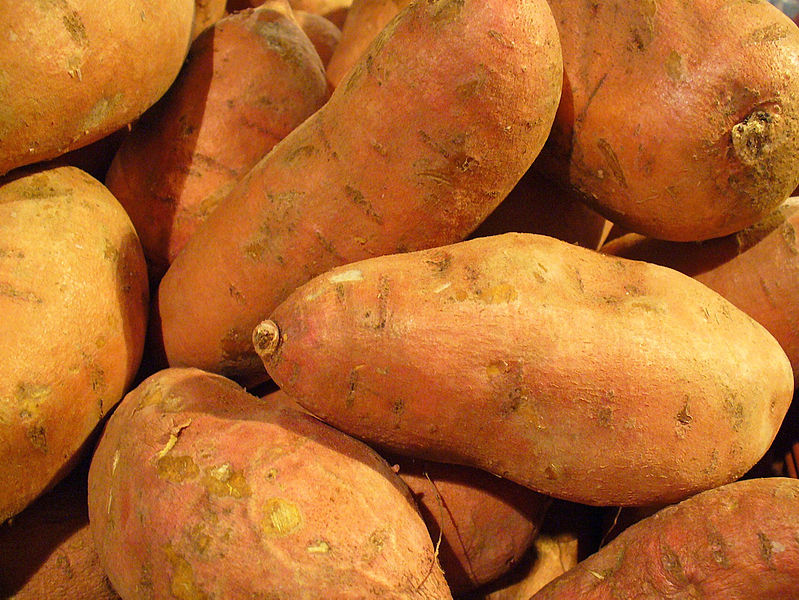
Each autumn, I stand in the produce section of the grocery store puzzling over the sweet potatoes and yams. They look identical to me. Do they taste differently? Are they prepared differently? What is the difference between sweet potatoes and yams?
Sweet Potatoes vs. Yams: What’s the Difference?
The USDA requires that all sweet potatoes that are labelled yams must also state somewhere on their label that they are sweet potatoes but not all sellers do so. Hence the cans of candied yams that line the store shelves are actually soft, reddish sweet potatoes. If you see a bin of “yams” in the produce section of your grocery store, they are really sweet potatoes. No wonder I was confused! In most U.S. grocery stores, yams and sweet potatoes are the same thing.
True yams are not normally found in grocery stores here in the United States. If you want to buy them, you must go to an international supermarket. Although most yams are grown in Africa and Asia, the yams which are sold in the United States are imported from the Caribbean, so visit a Caribbean market or any store that specializes in Caribbean foodsto find true yams.
What are Yams?
Yams (Dioscorea alata), which are related to grasses and lilies, are native to the tropical areas of Africa and Asia. They were introduced to the New World by the Portuguese and Spanish who were introduced to them via their Asian and African colonies. Yams are well-adapted to the tropical climate of Caribbean countries which closely resembles the climate of their native lands.

There are more than 600 varieties of yams, 95% of which are grown in Africa. They are dryer and starchier than sweet potatoes. Yams are a staple food in the areas where they are grown because their dryness means that they will store well. This is important because those countries have a rainy season when food can be difficult to come by. Rainy seasons are common in tropical areas. Yams require a humid, tropical environment to grow.
It is the tubers of the plants that are eaten. The tubers, which grow underground, range in size from a small potato up to 5 pounds. They have a dark skin that looks like bark and can be very hard. The inner flesh can be white, red or purple.
Yams can be prepared in different ways. They are usually boiled and mashed, then added to dishes, or dried and ground into a powder which then is made into a porridge-type dish. They can also be fried, roasted, baked, grilled, smoked and barbequed.
What are Sweet Potatoes?
Sweet potatoes (Ipomoea batatas) are related to morning glories. They are native to Central and South America and were widely eaten by the indigenous cultures of those areas.
Sweet potatoes are also found on islands in the Pacific Ocean. No one is sure how they got there, whether it was the intrepid sailors who explored the Pacific Ocean landing in the New World and bringing back sweet potatoes to their home islands or if it was adventurous sailors from the New World who brought them to the Pacific islands.

Sweet potatoes come in two varieties and this where the confusion with yams comes in. The sweet potatoes that were commonly grown by the first Europeans to colonize the New World looked very much like potatoes. They have a thin yellow skin and the interior flesh is firm and white. The softer, reddish sweet potatoes were introduced commercially later. The enslaved Africans referred to the soft sweet reddish potatoes as “yams” because of their resemblance to the yams in their native Africa and the name stuck.
The USDA hopped on board and labelled the soft, reddish sweet potatoes as “yams” to distinguish them from the firm white sweet potatoes. So firm, white fleshed sweet potatoes were called “sweet potatoes” and soft, reddish sweet potatoes became known as “yams”.
Final Word
So now you (and I) know the difference between sweet potatoes and yams. Remember, when you are cooking African or Asian dishes, if the recipe calls for yams, it is not referring to what Americans call yams which are really sweet potatoes. Visit your local international market to purchase the yams your recipe is calling for.
Leave a Reply