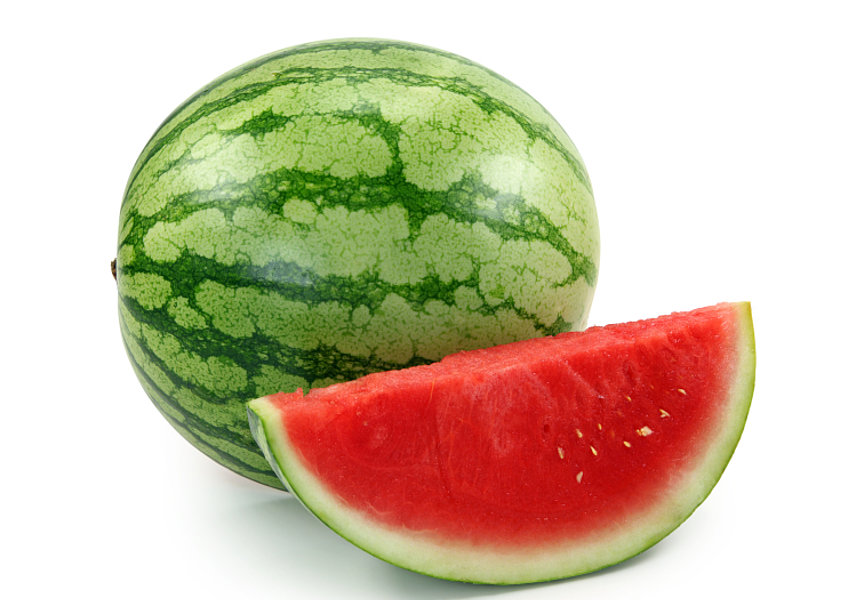
For me, watermelon has always been the taste of summer. It reminds me of long, hot, lazy summer afternoons. The refreshing flavor of a slice of watermelon is a great way to cool off.
What are Watermelons?
Watermelons (Citrullus lanatus) are members of the cucurbit family which includes squash, cucumbers and zucchini. The plants are large vines that produce fruit.
Watermelons have a long history. They are native to North Africa so it is not surprising that they have been found in Egyptian tombs. They are also mentioned in the Bible. They made their way along the Silk Road to China where they have been grown since the 10th century. The Moors introduced watermelons to Europe when they invaded in the 13th century. And the Europeans introduced them to the New World when they colonized it in the 16th and 17th centuries. The Native Americans quickly adopted the watermelon and added it to their diets.
How to Prepare Your Garden to Grow Watermelons
Watermelons require heat, a long growing season, and plenty of nutrients. They are heavy feeders. Enrich your soil with compost or well-rotted manure. You may want to lay down a layer of black plastic to warm the soil.
Choose a spot in your garden where cucurbits such as cucumbers, squash, or zucchini were not grown the year before. This prevents the spread of disease. Make sure you have enough space. Watermelon vines can grow up to 20 feet in length.
How to Grow Watermelons From Seed
Depending on the variety, watermelons require a growing season of 70 to 90 days. In northern climates with a shorter growing season, seeds should be started indoors one month before the last frost date. Use biodegradable pots such as peat pots to avoid damaging the roots when you transplant them into your garden. Plant three to four seeds 1/2 inch deep and thin them to the best one after they germinate. Always thin by cutting the seedlings at the soil line. Pulling them up out of the peat pot will disturb the roots of the remaining seedling. Cucurbits don’t like their roots disturbed. It could result in the death of the plant.
Start your seeds (and later seedlings) on a heat mat so that the soil temperature is between 70°F and 80°F. You can (carefully) transplant your seedlings into your garden two weeks after your last frost unless you are growing in peat pots. Peat pots can be transplanted whole directly into your garden.
In warmer climates with a longer growing season, you can direct sow your seeds into your garden two weeks after your last frost. The soil should be a minimum of 70°F for them to germinate. You can warm your soil by covering it with black plastic.
How to Grow Watermelons
Watermelons like good drainage, so it is best to plant them in hills. You can direct sow your seeds into your garden after the soil warms. Plant 8 to 10 seeds 1 inch deep in each 5 feet wide hill and thin to the three best seedlings after germination. Always thin by cutting off the unwanted seedlings at the soil line. Never pull them up. That can disturb the roots of the remaining seedlings possibly killing them.
Hills should be 3 to 4 feet apart. If you are planting in rows, space your plants 6 feet apart and your rows 6 feet apart. Remember, the vines will be very long, and you don’t want to crowd your plants. Doing so encourages disease such as powdery mildew.
It’s a good idea to protect your young plants from cool weather and pests with floating row covers. You will need to keep them covered for about six weeks, until the plants have developed flowers.
Begin regular watering as soon as your seedlings have emerged. Watermelons require 1 to 2 inches of water each week. To judge when your seedlings need to be watered, stick your finger in the soil. If it is dry up to the first knuckle on your finger, it is time to water. Adding mulch to your garden will keep the soil moist and discourage weeds, which will compete with your vines for water and nutrients.

Watermelons have male and female flowers. They depend on bees to get the pollen from the male flowers to the female flowers. When your vines start developing flowers, you should remove your row covers so that the bees can reach the flowers to pollinate them. The vines will develop male flowers first. This attracts the bees so that they are accustomed to visiting your watermelons every day. Two weeks later, the female flowers will appear. You can easily tell male from female flowers. Female flowers are the ones with the tiny watermelons at the base of the flower.
Cut back on watering when the fruit reaches the size of a tennis ball. Too much water will reduce the flavor of the fruit. A watermelon is 90% water. It is sweeter if you water it less. As your watermelons grow, place a bed of straw or a piece of cardboard under them to keep them off the soil and prevent rot.
How to Harvest Watermelons

How do you know when your watermelons are ripe? Many people use the “thump” method. If you thump a watermelon and it sounds hollow, it is ripe. The problem with this method is that it could damage your fruit. Others look at the stem that attaches the watermelon to the vine. If it is brown and appears dead, then the fruit must be ripe. This is not always true for all varieties. Some are not ripe until up to two weeks after the stem “dies.”
The best way to tell if your watermelon is ripe is to look at the white spot on the bottom. It will be white as the fruit ripens and then darken to a cream color, or even yellow, when the watermelon is fully ripe.
Use your pruners or a sharp knife to cut the stem rather than pulling it off the vine, which can damage both the vine and the fruit.
How to Store Watermelons
After harvest, your watermelon will last up to 10 days unrefrigerated. If you cut it into quarters or slices, wrap them tightly in plastic wrap and store them in your refrigerator for up to four days.
Leave a Reply