More and more homeowners are adding native plants to their landscapes. They know that native plants are well-adapted to their growing conditions having evolved to survive here. Native plants also provide food for native birds, animals and insects which non-native plants do not.
When planning your landscape, you should try to plan for winter interest as well as summer looks. A good native shrub that will grow in almost any conditions while providing winter interest is the snowberry (Symphoricarpos spp.).
What are Snowberries?

Snowberry bushes, also known as waxberry or ghostberry, are native to North America. They are deciduous shrubs meaning they lose their leaves in the winter just like many trees. They range from 3 to 6 feet tall and 3 to 6 feet wide. Snowberry bushes are hardy in zones 3 through 7. They grow best in full sun, but will tolerate some shade. They are not particular about soil, growing in anything from loam to clay.

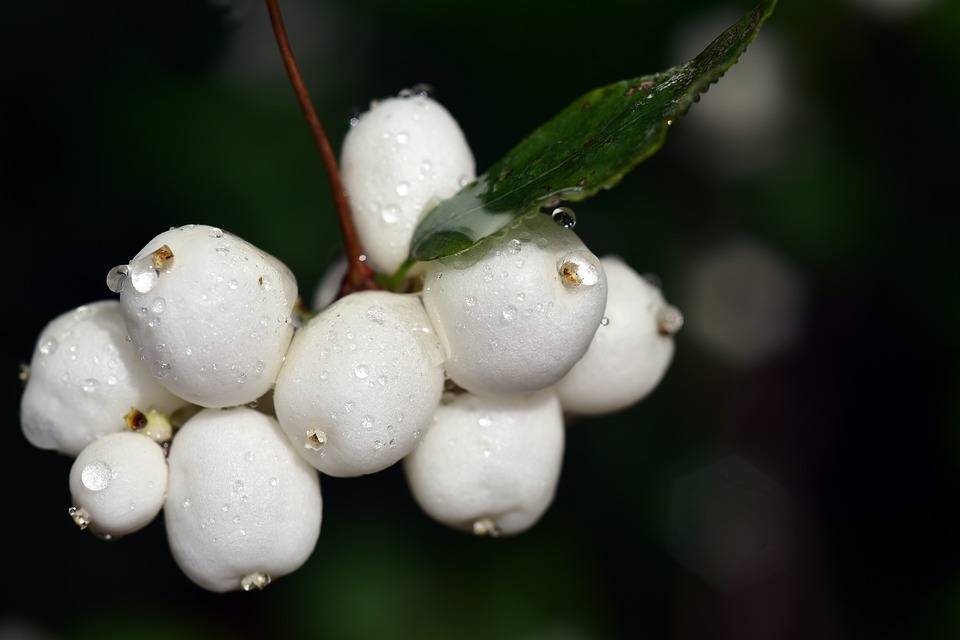
The bushes bloom from mid-May to July. The flowers are white or pink, depending on the variety. The berries range in color from white to pink to red, again depending on the variety. Most have white berries which is the source of its names, snowberry, waxberry and ghostberry. Each berry contains two seeds. What makes the shrubs attractive in the winter is that although the shrubs lose their leaves, the berries remain throughout the winter until they are eaten by birds. Snowberry berries are poisonous for humans. They contain alkaloids which cause dizziness and vomiting.

Do Snowberries Attract Birds?
Many native plants, including snowberries, are winter food for native birds. Grouse, quails and pheasants are particularly fond of snowberries. Plant the bushes if you want to attract these native birds.
Do Snowberries Attract Butterflies?

Snowberries do not attract butterflies, but they do attract two of our native moths, the Vashti Sphinx moth and the Clearwing moth. The moths lay their eggs on snowberry bushes because the leaves are the food preferred by their caterpillars. Clearwing moths are easy to find because they are active during the day. Vashti Sphinx moths are a little harder to spot. They are only active at dawn and dusk.
How to Grow Snowberries
Snowberry bushes are easy to grow. Your local nursery should carry a variety that is suitable for your growing zone. You can plant them almost anywhere in your landscape because they will grow in sun or partial shade. Pruning should be done in late winter or early spring. The shrubs are drought tolerant, deer resistant, and are not susceptible to disease or insect damage. You can plant them grouped as a hedge or just have one specimen plant. You don’t need more than one shrub to produce berries. The flowers are self-pollinating meaning there are not separate male and female flowers. Because they are so tolerant of different conditions and spread by suckers, they are a great plant for erosion control.
They sucker easily which means that they produce new bushes via underground runners much like bamboo does. The suckers help stabilize embankments and prevent erosion. The suckers can be a problem, though. Snowberries can become invasive like bamboo. You will need to be vigilant about digging up unwanted suckers to prevent your shrubs from spreading too far and taking over your garden or yard.
How to Grow Snowberries From Seed
One of the easiest ways to propagate snowberries is by using its own suckers. Just dig up a sucker and plant it where you want a new shrub to grow.
Growing a snowberry shrub from seed is difficult. It requires a lot of patience because the seed coat is extremely hard and the germination period is unusually long. Some seeds remain dormant in the soil for up to 10 years.
Each berry contains two seeds. You will need to remove the seeds from the berries, cleaning all of the moist outer covering off. Then you will need to scarify the seeds. Scarification is a process whereby you cut or weaken the seed coat so that seed can germinate. In nature, this is done by passing through the digestive tracts of animals when they eat the berries or by natural cold stratification which means the seeds need to experience a period of cold temperatures. For your snowberry seeds, you will need to do both.

The first step is to knick the hard seed cover or lightly sand it. This will allow moisture and warmth to enter the seed. In nature, when birds eat the berries, the seeds pass through their digestive tracts which softens the seed coats. Then you will need to plant them in well-drained planting medium, barely covering them with soil. Moisten the soil by misting it. Using a watering can will disturb the seeds. Place your seed flats in a room that is 75⁰F to 80⁰F for 90 days. This long period of warmth and moisture softens the seed coat.
Next you will need to mimic winter weather. Move your seed flat to your refrigerator or a room that remains 41⁰F. The seeds need to be chilled for 180 days, which is about how long a normal winter lasts. At the end of the 180 days, the seeds will finally germinate. It is recommended that you over winter your seedlings indoors for the first winter. Then you can plant them outdoors in the spring the following year after all danger of frost has passed.
Leave a Reply