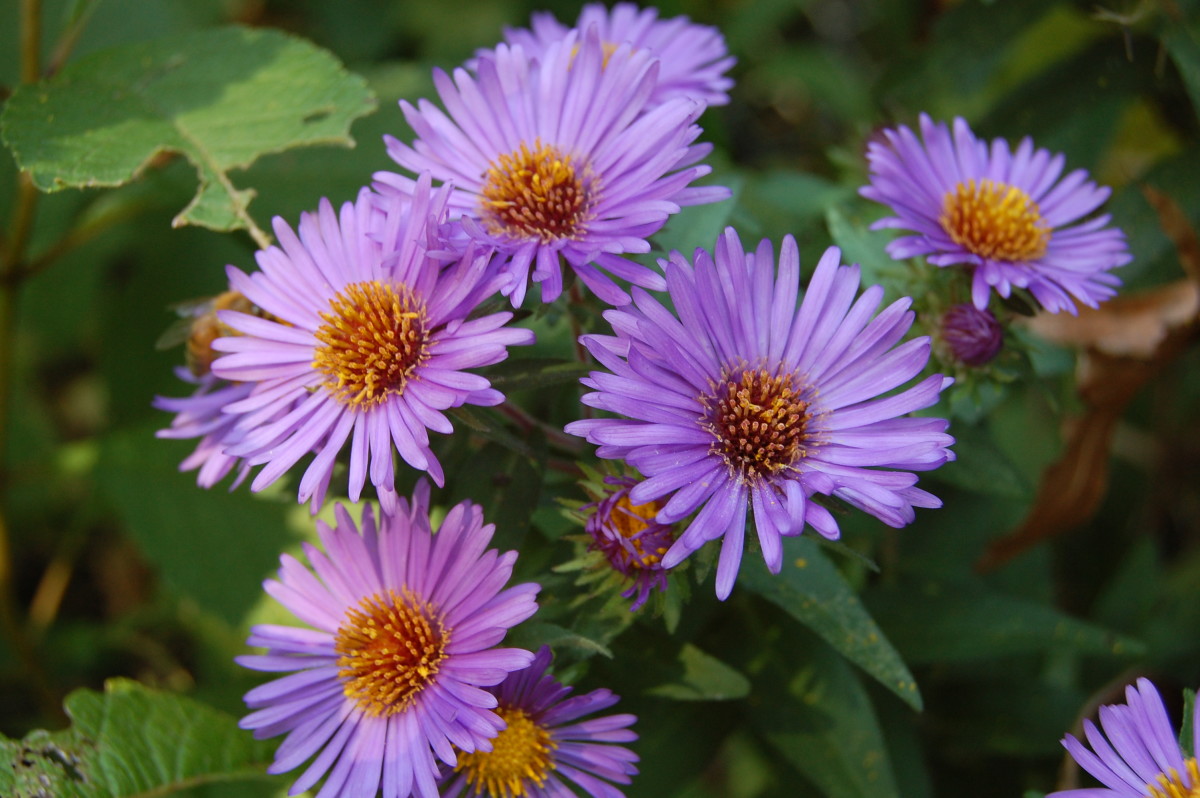
We can thank the Victorians for making chrysanthemums the classic flower of autumn. Prior to that, the aster, or Michaelmas Daisy, was the symbol of the fall season. Instead of the rusty reds, oranges and yellows that make us think of fall, the purples, pinks and whites of asters were considered fall colors.
The nickname “Michaelmas Daisy” refers to the Feast of St. Michael the Archangel which is celebrated on September 29 when the asters are blooming. The name “aster” is from an ancient Greek word meaning star which refers to the shape of the flower.

Asters (Aster amellus) are perennials that are native to the Northern Hemisphere. They are hardy from growing zones 3 – 8. The plants will grow in full sun as well as partial shade. They prefer well-drained soil that is slightly acidic with a pH of 5.8 to 6.5. Be careful not to over-water them. Like many native plants, asters are drought tolerant and prefer less water. A thick 2 inch layer of mulch is recommended to both keep down weeds and to prevent the soil from drying out quickly during the summer. Too much water or too little water results in fewer flowers and die-back of the lower foliage.
The plants are also susceptible to powdery mildew so it is best to water them at the roots rather than from overhead. I use a watering wand which is a hose nozzle that has a long handle so that I can water close to the roots without having to lean over. Divide your asters every 2 to 3 years to prevent overcrowding. Plants that are growing too close together are susceptible to powdery mildew and insect infestations. Asters will also have more blooms if they are spaced properly, 1 to 3 feet apart, depending on size.
Asters have been heavily hybridized so they range in size from groundcover plants of only 4 inches tall to the 3 feet height that is the norm for native asters. The shorter varieties are often used as borders while the taller ones can be used in the rear of your garden. The taller varieties should be staked to prevent them from falling over in the wind.
After the first hard frost, when the foliage has died, cut the entire plant down to the ground and remove the dead plant material from the garden. Removing the dead plant material prevents problems in the spring with insects that hibernate in plant debris during the winter.
Don’t worry, the roots are still alive underground. Your asters will be back in the spring.
Why do Asters Only Bloom in the Fall?
Asters are photoperiodic. “Photoperiodic” means that the plants respond to the number of hours of darkness rather than air temperature. Starting at the end of August as the the nights grow longer, asters begin to set buds which will bloom in September. They need ten hours of darkness to prompt them to start budding. Once the buds start to form, you should have flowers within 4 to 6 weeks.
To maximize the number of flowers, pinch your plants early in the growing season to make them bushier and produce more blooms. “Pinching” means removing the growing tips on the branches which will force the plants to grow more branches which will in turn produce more flowers. It’s called pinching because most gardeners remove the growing tips by pinching them between their thumbs and forefingers. It can also be done with sharp pruners. You can begin pinching in early June and stop in early July. The Fourth of July is usually cited as the best date to stop probably because it is easy to remember.
How to Grow Asters

Asters can be grown from seed, but germination is spotty. The seeds need to be cold stratified before you plant them. Cold stratification is a way of fooling seeds into thinking that it is winter. Some seeds require a period of cold or they will not germinate. Plant the seeds 1/8 inch deep in pots or a flat of moist soil and place the containers in your refrigerator for 4 to 6 weeks. Cover them with a plastic bag to prevent the soil from drying out while it is being refrigerated. Use a mister to moisten the soil if it starts to dry out. After they are removed from your refrigerator, place the pots or flats in a sunny window. Keep the plastic covering on the containers until the seeds germinate, usually within 10 days. After germination, you can remove the covering. When the seedlings are 6 inches tall, they can be transplanted outside after your last frost.
Most gardeners purchase asters as plants in the fall. They should be planted as soon as possible to give them a chance to settle into their new home and develop their root system which will help them survive the winter.
Whether you are starting from seeds or purchasing plants, be sure to give your plants enough room. Plant them 1 to 3 feet apart in your garden to keep them healthy.
Other Uses For Asters
Asters make excellent cut flowers. Harvest them when one fifth of the flowers are open. The rest will open in the vase. Beware! Bees love them so harvest your flowers later in the day after the bees have gone home.
Plant asters in your butterfly garden to attract butterflies which feed on their nectar. Moths will also show up because asters are the host plants for their larvae. You should always plant both nectar plants, which provide food for butterflies, and host plants, which provide food for the larvae, in your butterfly garden.
The flowers also provide a critical food source for monarchs who are migrating south to their winter homes in Mexico. Monarchs eat very little or not at all during the winter, so they must fill up on nectar during their migration. Like hungry bears in the fall, monarchs gorge on flower nectar to store fat in their bodies to get them through the winter.
Leave a Reply