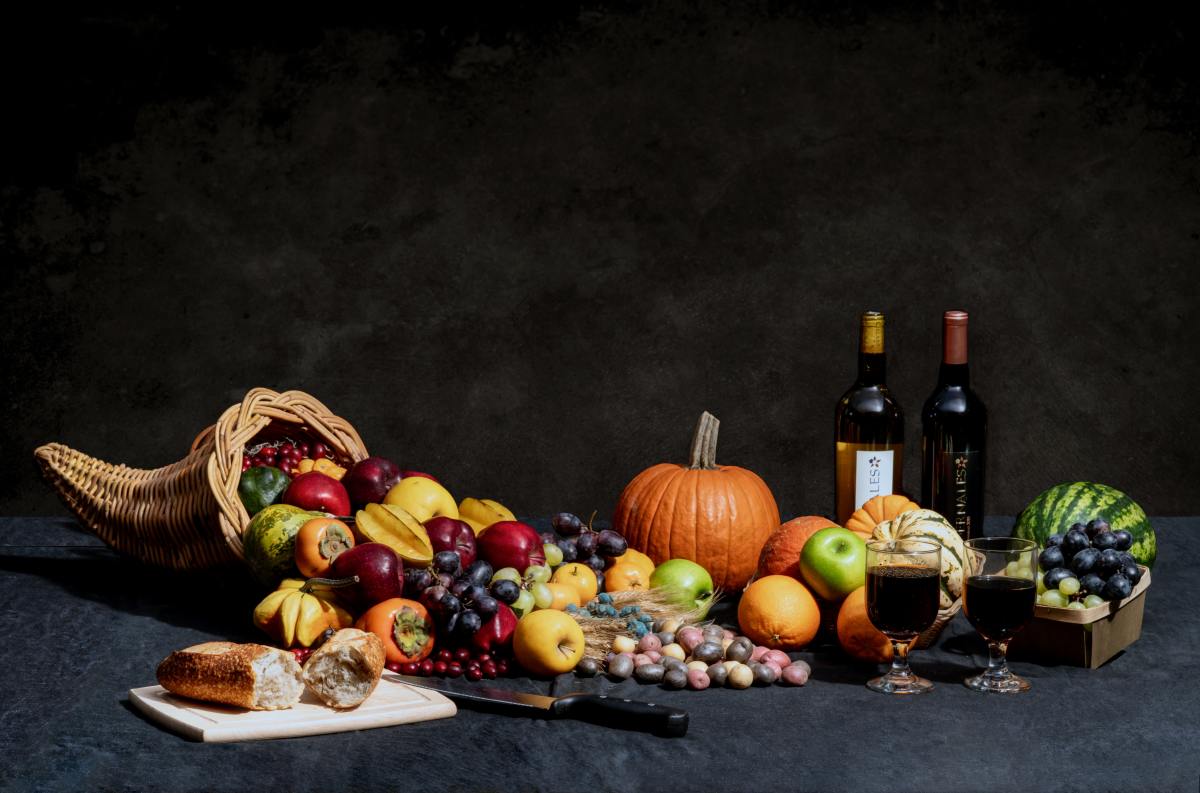
Thanksgiving Cornucopia
One of the most popular decorations for Thanksgiving is the cornucopia, a horn-shaped basket filled with fruits, vegetables, nuts, and flowers. It is a symbol of an abundant harvest for which the Pilgrims were giving thanks during the first Thanksgiving. Most likely there was no cornucopia at that dinner, so when did it become a part of our modern Thanksgiving holiday?
The Cornucopia in Mythology

The cornucopia is an ancient symbol with origins in mythology. The most often cited myth involves the Greek god Zeus, who was said to have been nursed by Amalthea, a goat. One day, he was playing too roughly with her and broke off one of her horns. Her horn became a symbol of strength (Zeus) and nourishment (Amalthea).
Another myth that is attributed to the origins of the cornucopia told of the Greek demi-god Herakles (Hercules in Roman mythology) wrestling with the river god, Achelous, who was often portrayed as horned. Herakles, renowned for his strength, broke off one of Achelous’ horns. Herakles kept the horn and filled it with fruits and flowers to be presented as a wedding gift to Deianira, his betrothed.
Regardless of whose horn inspired the stories, the horn became an attribute of many Greek and Roman deities who represented abundance and the harvest. It was most closely associated with the goddess Fortuna. Filled with the fruits of the harvest, it became the Horn of Plenty.
The Cornucopia in History
As Christianity spread throughout the ancient world, many peoples clung to pagan symbols like the horn of plenty. It gradually lost its mythological associations and instead became associated with bountiful harvests. It was used in harvest celebrations and was even part of church decorations during the harvest festivities. Many representations of horns of plenty appear in both paintings and statuary over the centuries.
The word cornucopia is first documented in an English dictionary that was printed in 1508. It derives from two separate Latin words, Cornu, meaning horn, and Copia, which means plenty.
Because of its associations with abundance, the cornucopia has been used on currencies, seals and coats of arms. In more modern times, it has been used in the ornamentation of public buildings especialy banks and government offices.
How Did the Cornucopia Become Associated With the Thanksgiving Holiday?
The first Thanksgiving celebrated by the Pilgrims and Native Americans was a harvest celebration, similar to the ones that the Pilgrims had celebrated in their home country. However, it did not become an annual public holiday until the Civil War. President Lincoln decided that a public holiday to be celebrated by everyone, north and south, would be good way of unifying the nation. He proclaimed the last Thursday of November to be our day of Thanksgiving. The date was changed to the fourth Thursday in November by President Franklin Roosevelt in 1941.
Traditional foods for the Thanksgiving holiday are a reflection of the foods that are thought to have been served at the first Thanksgiving celebration. The main course, turkey, is a native bird, although the ones found on our Thanksgiving tables bear little resemblance to the original wild turkeys. Potatoes, cranberries, corn, sweet potatoes, pumpkins and squash, all of which are native fruits and vegetables, are features of a traditional menu. Newer migrant peoples have added dishes that are traditional to their cultures to their Thanksgiving menus.
Thanksgiving decor has always featured the fruits of the fall harvest so it is no surprise that the traditional and very ancient cornucopia is also included, often as the centerpiece on the Thanksgiving table. Cornucopias are offered for sale in many places in the fall. The horn is usually a wicker basket but can also be made of ceramic, metal, stone, and even wood. The vegetables, fruits, nuts, and flowers filling them are manufactured, rather than the real thing. After Thanksgiving, most people store them for re-use the following year.
Leave a Reply