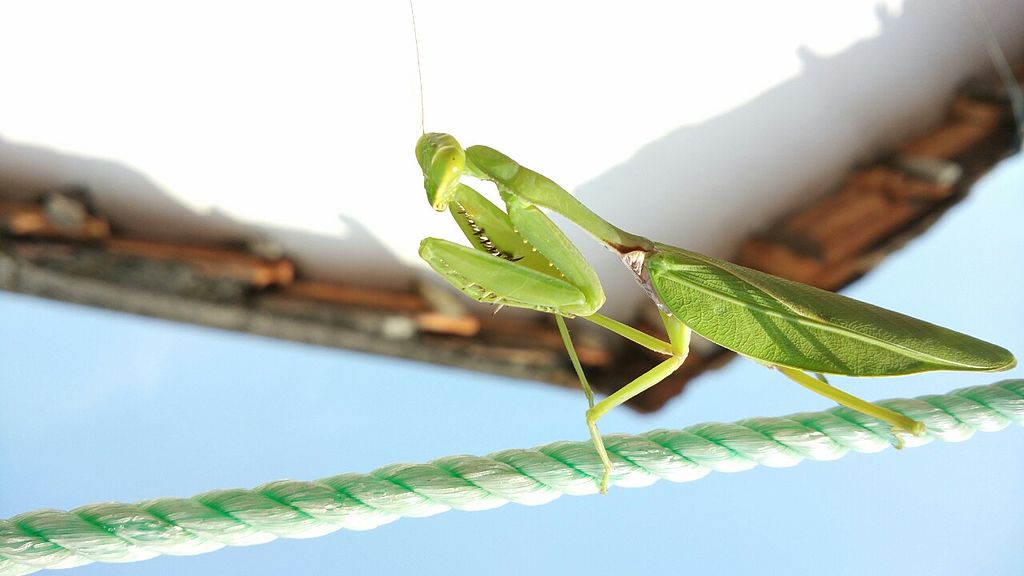
Praying mantises, or mantids, are the largest insects in your garden. Adults can grow up to 5 inches long. They look frightening, but you want them patrolling your garden. They are voracious eaters of insects and caterpillars including the ones that can destroy your flowers and vegetables.
What are Praying Mantids?

Praying mantids (Mantodea spp.) are warm region insects. They are found throughout the temperate regions of the world. In all, there are 1800 species worldwide. Only 11 species are native to North America. In addition to the native mantids, both the European mantis and the Chinese mantis were introduced into the Northeast US for insect control.

Mantids range in color from brown to green. Their coloration enables them to blend into the landscape, especially in grasses and shrubbery. This camouflage is important so that their prey do not see them. They are ambush predators. You can find mantids not only in your garden, but also in wilder areas such as pastures, fields and even ditches.
Females lay their eggs in the fall in cases that harden to protect them from the harsh winter weather. The eggs hatch in the spring. The young mature by late summer and then die in the cold winter temperatures after mating and leaving the next generation of eggs behind.
What Do Praying Mantids Eat?
Younger, smaller mantids eat insects exclusively. They have no preferred species. They eat any insect that they can catch including caterpillars, butterflies, moths, bees, wasps and flies. Unfortunately, they do not discriminate between “good” bugs such lady bugs and “bad” bugs such aphids. They will eat everything, even each other if they can’t find anything else to eat.
In the late summer when the mantids have reached their adult size, they branch out to other, larger prey. They have been known to eat lizards, rodents, frogs and even hummingbirds.
How Do Praying Mantids Catch a Meal?
Praying mantids are ambush predators. Ambush predators catch prey by sitting still and waiting for the prey to come to them rather than by actively hunting them. Praying mantids perch on a stick or blade of grass, grasping it with their middle and hind legs. They sit upright, holding their front legs in the familiar prayer position waiting for a meal to walk or fly by. When an unlucky insect comes within reach, the hungry mantid strikes, impaling the insect on its spiny front legs. This happens literally in the blink of an eye.
Do the Female Mantids Kill the Male Mantids After Mating?
Yes! And it actually helps the mating process. The female will try to bite off the head of the male because it will stimulate him to copulate. It also prevents him from eating her first. Of course if every male was killed by the females, there wouldn’t be enough males to go around. The males try to sneak up on the females and quickly inseminate them before jumping away to safety, hopefully before she has a chance to realize what is going on and eating them.
How Do I Attract Praying Mantids to My Garden?

Believe it or not, the best way to attract praying mantids to your yard is to plant shrubbery. The females prefer to lay their egg cases in shrubbery because the dense branches and leaves hide them from hungry birds who consider them a delicacy. It doesn’t even have to be large shrubs. I have seen egg cases on lavender which is actually a small woody bush. Lots of shrubbery in your yard means lots of places for females to conceal their egg cases. In the spring, you will be rewarded with plenty of hungry baby mantids eager to rid your yard and garden of insects.
You can help matters along in the spring if you find an egg case in a wild place by moving it to a shrub in your yard so that the mantids will hatch where they can do the most good for you.
Leave a Reply