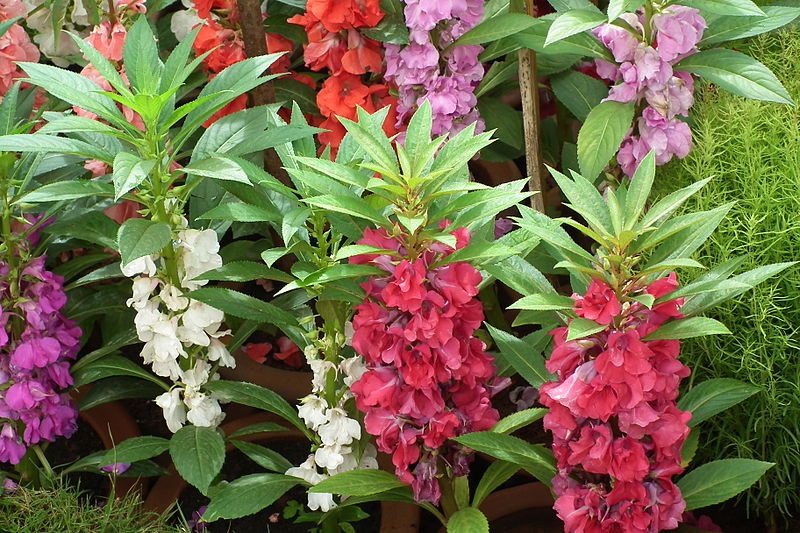
Balsam, or Touch-Me-Not, is a nearly forgotten annual flower that used to be a cottage garden favorite. It is related to the ubiquitous impatiens which have been ravaged by downy mildew, an airborne fungal disease. Downy mildew has become such a problem that many nurseries no longer sell impatiens. Balsam, although related to impatiens, is resistant to this disease.
What is Balsam?

Balsam (Impatiens balsamina) is native to India and Southeast Asia. It was brought to England during Victorian times by the intrepid plant hunters of that era. The colorful flowers and neat, upright habit made them perfect as a bedding plant.

Their nickname, Touch-Me-Not, refers to their method of spreading their seeds. When touched, ripe seed pods literally explode spraying seed all over your garden. Thanks to the ease with which the seeds germinate, balsam can become invasive in your garden. I often find myself pulling out seedlings in my garden.
The plants grow to 12” to 18” high. The flowers are double, resembling double impatiens and camellias. Flower colors are pink, white, rose, purple and red with many bicolors. Flowering will continue until frost kills the plants. Unlike their hybrid impatiens cousins, balsam will come true from seed meaning the offspring will look like the parents which is usually not the case with hybrid plants.
Are Balsam Considered Medicinal Plants?
In traditional Asian medicine, balsam plants are used to treat skin diseases, warts and snake bites. The flowers are used to treat burns.
How to Grow Balsam in Your Garden
Balsam love sun, but in areas with hot summers they prefer a little afternoon shade. They need rich, well-drained soil. You should plan on fertilizing them twice a month with a balanced fertilizer specifically formulated for flowers or you can work a lot of compost into the soil. Because compost is not as nutrient dense as chemical fertilizers, you will need more compost than you would normally use in your flower beds. Balsam doesn’t mind summer heat waves but the plants need to be watered regularly. They will stop flowering if they don’t get enough water. They will die if they dry out completely. A thick layer of mulch will keep the soil moist between waterings.
If you are purchasing plants, they should be spaced 12 inches apart.
How to Grow Balsam in Containers
Balsam can be grown in containers as long as they have the proper amount of sunlight and fertilizer. Watering is critical when they are grown in containers because containers dry out much more quickly than your garden. You should plan on watering your containerized plants every day.
Either use potting soil that has slow release fertilizer in it or if regular potting soil is used, sprinkle some slow release fertilizer on the soil after you have planted your balsam. It’s important to provide enough fertilizer to any plants grown in containers because each time you water, nutrients are leached out of the soil. Those nutrients need to be replaced or your plants will not grow and thrive.
How to Grow Balsam From Seed
Starting Your Seed Outdoors – You can direct sow your seeds in your garden after your last frost when the soil has warmed. These are tropical plants. The seeds will not germinate in cold soil. In my New Jersey zone 6 garden, I wait until the last week in May or first week in June to sow my tropical seeds.
Sprinkle the seeds on the surface of the soil. Do not cover them. They need sunlight to germinate. Germination is quick, in as little as four days. After the seedlings have developed their first true leaves, thin them to 12 inches apart.
Starting Your Seed Indoors – Balsam seeds can be started indoors 6 weeks before your last frost. Surface sow the seeds in containers with pre-moistened soil. Do not cover them. They need sunlight to germinate. I always moisten my soil before sowing seeds on the surface because if I wait to water until after I sow them, the water will wash the seeds out of the pots or cause them to float to one side or a corner of the container.
The seeds should start germinating within four days. Keep the seedlings well-watered. You can plant them outdoors after your last frost when the soil has warmed. Space your seedlings 12 inches apart.
Balsam’s colorful flowers light up the garden all summer. It’s easy to grow and will reseed itself for years of enjoyment.
Leave a Reply