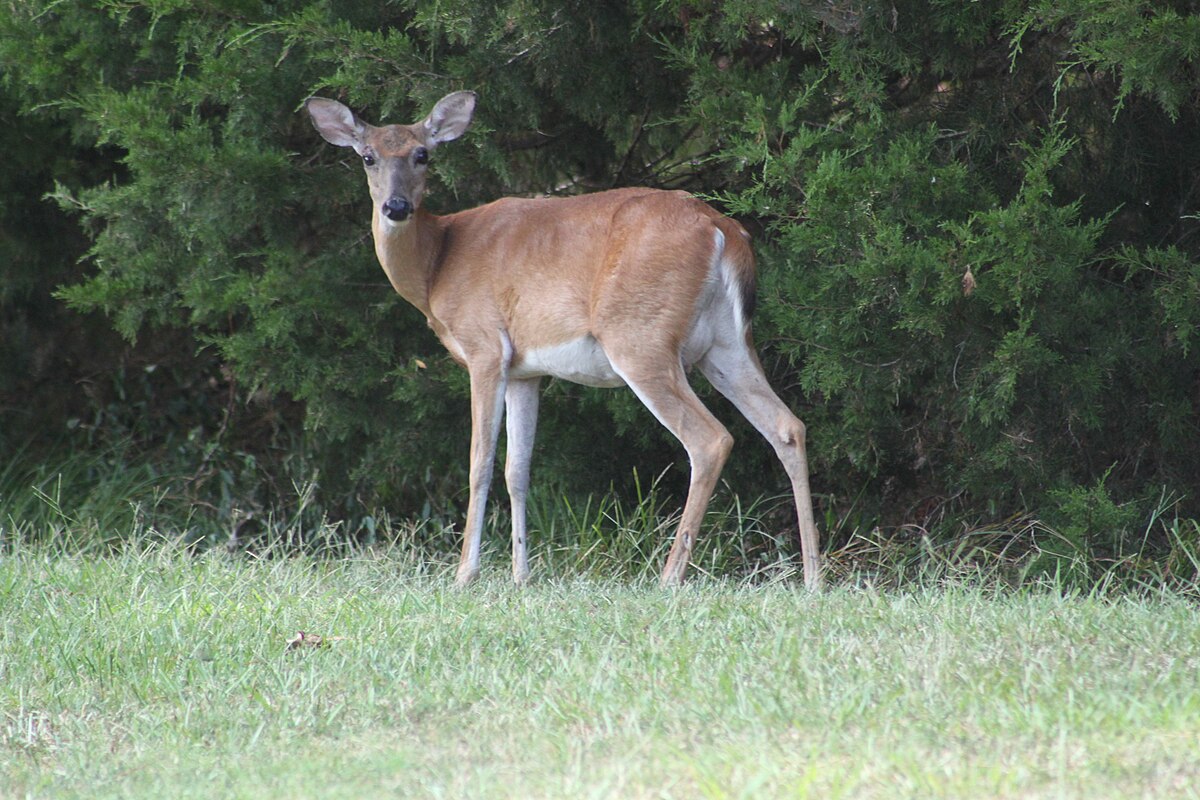
There’s good news for gardeners who share their yards with deer. There is a nice selection of bulbs that deer usually stay away from. A hungry deer will eat anything, but these bulbs are a last resort. A few of them are even poisonous.

Snowdrops
Snowdrops are one of my favorite bulbs. They grow and bloom so early that very often there is still snow on the ground. Their tiny white bell flowers blend with the snow, so you have to look closely for their green foliage. I know that spring is not far off when the snowdrops start to bloom. Another of my favorite things about them? They increase in number every year.
Winter Aconite
Winter aconite is another flower that blooms through the snow. A member of the buttercup family, their cheerful yellow flowers brighten up the dull winter landscape. They spread freely throughout your garden.
Glory-of-the-Snow
Does the word “snow” in the name tell you anything? This is another early bloomer. Unlike its monochromatic counterparts, its star shaped flowers come in white, blue or pink. It spreads both via bulbs and seeds.


Crocus
When the crocus start blooming, you know that spring has officially begun. They come in an array of bright, primary colors and increase in numbers every year. Deer stay away from them, but rabbits love to eat them so if you have rabbits in your yard, you might want to think twice about planting crocus. My own experience is that the rabbits in my yard left my crocus alone, preferring to dine on my tulips.
Daffodils

Who, besides deer, doesn’t love daffodils? They come in a variety of colors and flower form. Trumpet, doubles, small cup. There is something for everyone. And each kind blooms at different times from early to late spring. You can literally have months of daffodil blossoms. The bulbs readily multiply every year. And why don’t deer like them? Because they are poisonous.
Hyacinths
Deer stay away from strong scents. Hyacinths are not only strongly fragrant, but like daffodils, are poisonous. That’s good news for hyacinth lovers. You can plant all the colors. For truly perennial hyacinths that will come back year after year, try the multiflora hyacinths. The flowers are looser, but the bulbs live longer than the 3 to 4 years that are normal for the more formal varieties.
Grape Hyacinths
Grape hyacinths aren’t really hyacinths. Their flowers grow along a stem like a hyacinth but are packed along it like a cluster of grapes. I refer to them as “escape artists” because they escape from my garden and pop up in my lawn.
Grape hyacinths come in purple, blue, pink and white. Like other spring blooming bulbs, the foliage dies after they have bloomed. Then they develop a second flush of foliage in the fall. They don’t bloom in the fall, however. Gardeners take advantage of this second flush of foliage by planting a few grape hyacinth bulbs in the same holes as their other spring bulbs “marking” where they have planted them so that they don’t accidentally dig up their spring flowering bulbs when adding perennials to their gardens in the fall.


Bluebells
Bluebells are a member of the hyacinth family and look a lot like them. Their flowers aren’t packed as tightly as hyacinths. Contrary to their name, they also come in white and pink. They are hardier than hyacinths and multiply each year.
Siberian Squills
Although they don’t look like it, Siberian squills are a member of the lily family. They produce blue, downward facing flowers with six petals. The bulbs don’t produce offsets. They only reproduce by seeds.


Lily of the Valley
Lily of the valley is a classic cottage garden flower with a delightfully old-fashioned scent. Be careful, though. It spreads so aggressively that it is considered invasive in some areas. I find its scent and white, bell shaped flowers irresistible. Lily-of-the-valley also comes in pink, but beware. The pink flowered ones are very expensive. Like hyacinths, it’s not just the scent that keeps the deer away. Lily-of-the-valley is also poisonous.
Alliums
“Allium” is just a fancy name for ornamental onion. Deer don’t like the onion smell, so feel free to plant as many varieties of allium as you have room for. From large purple globes to “hairy” flowers that look like bedhead, there is something for everyone in shades of purple, pink, yellow and white. Which ones are in my garden? Globe alliums, of course, and drumstick alliums with flowers that look like eggs.


Fritillaria
Fritillaria come in all sizes from the impressive Crown Imperial to the tiny Snake’s Head. Deer hate them all. Be careful not to plant the crown imperial too close to your living areas. The scent has been described as like a fox. I’ve never smelled a fox, but I can attest to the fact that it smells similar to a skunk! The smaller bulbs lack the noxious odor but are still deer resistant. My personal favorite is the Guinea Hen Flower. From a distance, the flower appears to have a checkerboard pattern on it.


Deer can be very destructive to your landscape. Planting deer resistant plants can help alleviate the destruction. Fortunately, there are quite a few bulbs that bloom in the spring that are not on the deer’s menu.
Leave a Reply