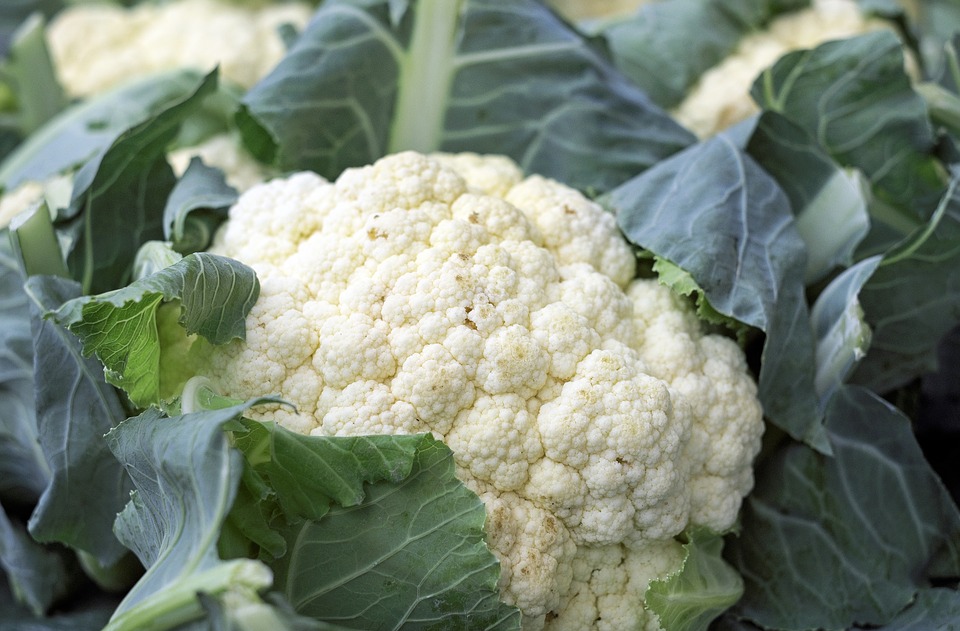
If you are planting a fall garden, cauliflower should be at the top of your list of must-haves. It is a cool-season plant that can be planted in either spring or fall but does best in the fall with its cooler daytime temperatures.
What is Cauliflower?

Cauliflower (Brassica oleracea var. botrytis) is a member of the brassica family. It is closely related to Brussels sprouts, broccoli, kale, cabbage, and collard greens. Collectively, this group of vegetables is known as cole crops.
Cauliflower is an annual cool season vegetable with a characteristic white “head” that resembles cheese curds. Typically only the head is eaten. Newer cultivars have green, orange or purple heads. The colors do not affect the taste and usually fade when the heads are cooked.

How to Prepare Your Soil to Plant Cauliflower
You will need a spot that receives at least 6 hours of sunlight each day. The soil should be rich in organic matter and well-drained. Your plants will become stunted if your soil is poor or dries out too quickly. Soil pH should be between 6.5 and 6.8 for optimum growth and to prevent clubroot disease.
Clubroot disease is caused by a fungus in the soil. It affects Brassicas. It infects their roots causing them to swell and become deformed much like a club foot in humans. Infected roots are unable to properly absorb nutrients causing the plants to first grow poorly, then wilt and die.
How to Grow Cauliflower From Seed
Although most gardeners use transplants, cauliflower is easy to grow from seed. You can start your seeds indoors or direct sow them into your garden. Plant your seeds ¼ to ½ inches deep four to six weeks before your last frost. If starting indoors, you may want to use a heat mat to maintain a constant soil temperature of 70⁰F. For fall planting, start your seeds indoors six to eight weeks before your first frost date in the fall.
You can transplant your seedlings outdoors when they have two sets of true leaves. Harden off your seedlings before transplanting them outdoors and then plant them 18 to 24 inches apart. If you have direct sown your seeds, thin them to 18 to 24 inches apart to give your plants space to grow. Mulch them well to conserve moisture.
How to Grow Cauliflower From Transplants
If you prefer to purchase transplants instead of starting from seed, you will want to plant them two to four weeks before your last frost date in the spring or six to eight weeks before your first frost date in the fall. In either case, space your transplants 18 to 24 inches apart and mulch well to conserve moisture.
How to Grow Cauliflower
Cauliflower needs to be kept moist. Plants require 1 to 1 ½ inches of water every week. If it gets too dry, the plants become stunted. Nutrients are important also. You can side dress your plants with a high nitrogen fertilizer or drench them with fish emulsion every two weeks during the growing season. I like to use blood meal rather than petroleum based fertilizers on my plants that require extra nitrogen. Blood meal is an all-natural product.
When the head is two to three inches across, tie the surrounding leaves over it securing them with string or a rubber band. This will ensure that the head remains white. If it is exposed to the sun while growing and developing, it will turn brown. Tying the leaves over the head is called blanching. Blanching is not necessary if you are growing any of the colored varieties.
The heads should be ready for harvest within 7 to 12 days.
How to Harvest and Store Cauliflower
Cauliflower is ready to harvest when the heads are six to eight inches in diameter. Cut the head off at the neck and either use immediately or store in your refrigerator for up to two weeks.
Alternatively, you can uproot the entire plant and hang it upside down in a cool, dark place. They will keep for up to a month.
In the fall, if you are not able to harvest your cauliflower before the first hard frost, that’s okay. Cauliflower heads can freeze right on the plant. Just don’t allow them to thaw. Instead, harvest them before they thaw and cook them immediately.
Cauliflower has a reputation for being difficult to grow but if you are willing to keep your plants moist, well-fertilized and cool, you will be rewarded with harvests in the spring and the fall.
Leave a Reply