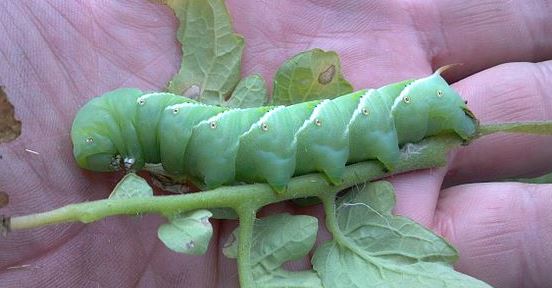
When I was a child, I was not afraid of insects or snakes. It was not uncommon for me to capture them and bring them home with the intention of keeping them as pets. In an effort to keep me from bringing home tomato hornworms, my father told me not to touch them because they would sting me, pointing out the large stinger on the rear of their bodies. That stinger looked huge and terrified me. I gave tomato hornworms a wide berth after that.
What are Tomato Hornworms?
The tomato hornworm (Manduca quinquemaculata) is probably the largest caterpillar that you will find in your vegetable garden, measuring as much as 5 inches long. They are green with white and black markings and sport a horn on the rear of their bodies. They do not sting, however.

Tomato hornworms are the larval stage of the sphinx moth, commonly referred to as the hummingbird moth because of its resemblance to hummingbirds both in body type and how they fly and sip nectar from flowers. The moths pupate in the soil over the winter, emerging in the spring to lay their eggs on your solanaceous plants, including tomatoes, eggplants, peppers and potatoes. The eggs hatch within 5 days and the resulting larvae, the tomato hornworms, then spend the next 4 to 6 weeks gorging themselves on the foliage of your solanaceous vegetables before they burrow into the soil and spend the winter inside of a cocoon. In warmer climates, the larvae will stay in the soil for 2 to 3 weeks creating the possibility of a second generation during the growing season.
Hand Pick Tomato Hornworms From Your Plants
Damage from the tomato hornworm is easy to spot, however finding the larvae themselves is a little more difficult because their coloring and markings act as an excellent camouflage. Look for their green droppings in the tops of the leaves. The hornworms will be on the undersides of the leaves. Then you can simply pick them off the leaves (remember they don’t sting despite the scary horn) and either squish them or if you are squeamish like me, drop them into a bucket of soapy water. They will drown because they can’t swim.
Use Companion Plants in Your Garden
You can prevent the moths from laying their eggs on your plants by interplanting dill or borage amongst your solanaceous crops. The moths don’t like them, and will fly off to your neighbor’s garden to lay their eggs. A common mistake that gardeners make is to plant their companion plants in a separate plot in their gardens or along the border of their gardens. Moths will simply fly by those companions and continue into the solanaceous buffet you have prepared for them. For companion plants to be most effective, you need to plant them in the same rows or plots as the vegetables you are trying to protect.
Attract Beneficial Insects to Your Garden

Beneficial insects are a big help in controlling pests in your garden. Attract them by planting flowers and herbs that have tiny blossoms. Brachnid wasps which are tiny themselves, love the pollen of those tiny flowers and will reward you by laying their eggs on the tomato hornworms they find on your solanaceous plants. Those eggs will hatch and the larvae will feed on the hornworm, killing it. If you see a tomato hornworm sporting what looks like grains of rice on his back, leave him alone. The “rice” is actually the eggs of the brachnid wasp and that hornworm is a “dead man walking”.
Till Your Garden Twice a Year
Most gardeners till their gardens in the spring. A deep tilling in the fall after your garden is finished and then again in the spring before planting will kill up to 90% of the pupating larvae in your garden. That means many fewer moths laying eggs in the spring. An additional benefit of a fall tilling is that the plants that you till into your soil will compost in the soil over the winter, adding valuable nutrients that will be ready to be used by the vegetables that you plant in the spring.
Leave a Reply