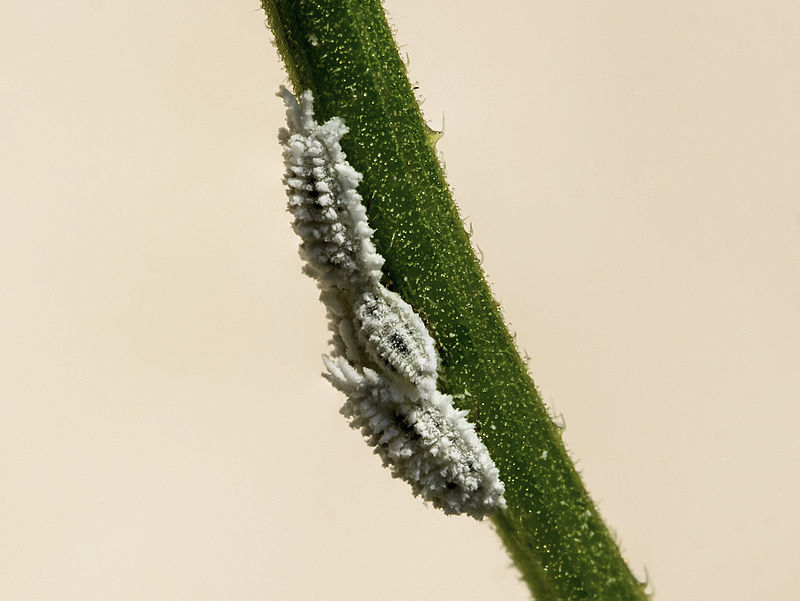
While pruning some shrubbery one summer day, I found white fuzzy stuff on the stems and leaves. When it moved, I realized it was insects. I was shocked to learn that they were mealybugs. I thought mealybugs only survived indoors on houseplants. I wasn’t aware that they can be a problem outdoors as well.
What are Mealybugs?
Mealybugs (Pseudococcidaeare spp.) small armored insects that suck sap from plants, eventually killing them. Plant sap is similar to our blood. If plants lose too much sap, they will die just as we die if we lose too much blood. The insects’ bodies have a waxy coating that makes them impervious to insecticides. The females are 1/8- to 1/16-inch long and wingless. The males are smaller and have wings. They have wings so that they can fly around in search of females. The males don’t feed. They have very short lives, only living long enough to fertilize the females and then die. The females lay 50 to 200 eggs in a sac two to six times a year, depending on the species. Most species do not survive the winter. They need warmer temperatures which is why they are such a pest year round indoors on houseplants or in greenhouses.

Mealybugs don’t move far on their own. Most infections are the result of new plants which are infested with them being brought into your garden or your home.
Ants can also move mealybugs from plant to plant. The mealybugs secrete honeydew, which ants eat. They are known to “farm” mealybugs, protecting them from other insects and harvesting the honeydew.
Always Isolate New Plants
Always check new plants carefully for mealybug infestation before purchasing them and bringing them into your home or installing them in your yard. Even if you don’t see any, it is a good practice is to quarantine new plants for a few weeks before planting them in your garden or introducing them into your home. Any infestation of mealybugs will show up during that time.
Wash Mealybug Off Your Plants
An easy way to rid your plants of mealybugs is to spray infected plants with a hose that has a high pressure nozzle attached. This will knock the insects off of your plants. This won’t kill the insects nor will it get rid of them completely. It merely minimizes the infestation, making it more likely that your plants will survive.
Shortly after I discovered the infestation on the shrubs that I was pruning, we had a hard rain. When I checked the shrubs the following day, all of the insects had been washed away by the force of the rain.
Indoors, you can simply place infected houseplants in your sink and use the sprayer to remove the insects. Don’t forget to wash under the leaves where these insects can hide. Since the houseplants are smaller and you can be more thorough, this is a good way to completely rid them of this pest.
Pick Mealybugs Off Your Plants by Hand
For smaller infestations, you can remove mealybugs from your plants manually. Use a cotton swab dipped in rubbing alcohol to remove the insects from the plants. Alcohol dissolves their waxy covering, so this method also kills the insects.
Use Sprays Made With Soaps or Oils
Spraying infected plants with insecticidal soaps, horticultural oils or neem oil are safe, organic ways to kill mealybugs. All three are readily available at your local nursery or online. The oils and soaps smother the insects, killing them. Make sure when you spray that you get the undersides of the leaves and the stems of the plants where these insects often hide.
Use Beneficial Insects
Outdoors, encourage beneficial insects to visit your yard by not using insecticides or herbicides which can kill or harm them. Ladybugs, parasitic wasps, lacewings and syrphid flies think mealybugs are delicious. Ladybugs can be purchased online and released into your yard. Just be aware that once they have eaten all of the mealybugs, they will fly away in search of food rather than waiting around to see if more will appear.
Most plants can tolerate mild infestations of mealybugs but when they become too numerous, they can literally suck the life out of your valuable garden plants or houseplants. Protect your home and yard from these insects using these simple, organic steps.
Leave a Reply