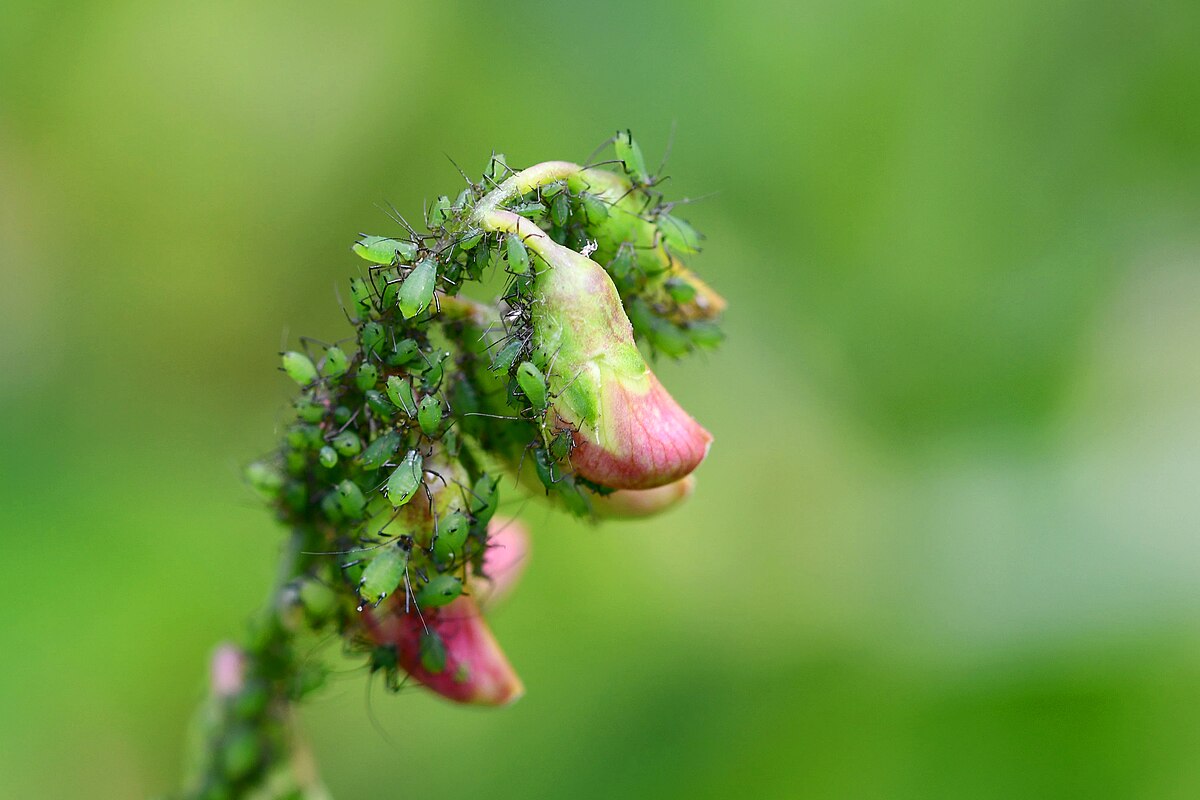
Aphids are a bane in your garden and on your houseplants. They feed on new growth, leaving shriveled leaves and buds in their wake. Thankfully, getting rid of them is fairly simple.
What are Aphids?
Aphids (Aphidoidea spp.) are tiny insects that are only about one quarter inch long. They come in a variety of colors ranging from white to green to black. Most of the aphids you see will be wingless, but if a plant gets too crowded, some of them will develop wings to fly to other plants and start new colonies.
Characteristic aphid damage includes stunted or misshapen leaves, and curling or yellow leaves. If you see aphid damage but no aphids, look at the underside of the leaves. Aphids live and eat on the new growth and the undersides of mature leaves.
Aphids reproduce quickly leading to many generations in a single summer. Their preferred food is the sap found in the leaves and stems of your plants. The sap is especially prevalent in new growth so aphids will start feasting on that first. Once they have sucked out all of the available sap from one plant, they move on to another plant.

Even worse than their feeding habits is that they also spread disease. Because they feed by piercing the leaves and sucking out the sap, they transfer systemic diseases that are carried in the sap from plant to plant, possibly infecting your entire garden or houseplant collection.
Ants are often associated with aphid infestations. Aphids excrete a sweet liquid known as honeydew which is a favorite food for ants. Ants will, in fact, “farm” aphids by carrying them to plants to feed much as we herd animals in fields. Making sure that the aphids are well fed ensures a steady supply of honeydew for the ants.
Knock Aphids Off With a Hose

The simplest and easiest way to get rid of aphids is using your garden hose. Just aim a concentrated stream of water at the underside of the leaves and knock them off. You will need to do this every day until you no longer see aphids on your plants. You can use a nozzle specifically designed to deliver water at a high pressure or you can just stick your thumb at the end of the hose to create a strong stream of water.
Indoors, hold your houseplants upside down in a sink and use the sprayer to knock the aphids off the undersides of the leaves.
Manually Wash Aphids Off
Another tactic you can use indoors or outdoors if you catch the infestation early before there are too many aphids on too many leaves is to wipe the foliage with a mixture of water and a few drops of dish soap. Make sure that you wipe both the upper and lower sides of the leaves. You can use a dish cloth, paper towel or sponge to wipe your leaves.

Use Beneficial Insects
Lady bugs love aphids! Aphids are their favorite food. If you don’t already have lady bugs in your yard, you can order them online. Simply release them into your rose garden and they will eat their fill of aphids. Be aware though that after they have eaten all of the aphids, the lady bugs will fly off in search of more food. They won’t stay in your yard waiting around for new food sources.
Use Sprays That Contain Insecticidal Soaps or Horticultural Oils
Your local nursery probably carries a large selection of insecticides that work quite well in ridding your plants of aphids. The downside outdoors is that they also kill beneficial insects such as lady bugs and pollinators that you need for your vegetable garden. Use sprays that contain insecticidal soaps or horticultural oils instead.
Insecticidal soaps contain potassium salt of fatty acids which react with the outer membrane of soft-bodied insects such as aphids, disrupting it and killing them. The sprays must be applied weekly (more often if it rains) to completely eliminate aphids.
Horticultural oils are usually mineral oils, or occasionally vegetable oils, that coat the outside of aphids and smother them. Like insecticidal soaps, they must be applied frequently and reapplied after rain which will wash them off.
Always read the labels carefully for the correct dilutions and application rates of both insecticidal soaps and horticultural oils.
Make Your Own Sprays
You can make your own sprays using ingredients you already have on hand such as liquid dish soap, rubbing alcohol, cayenne pepper and even Listerine. A quick internet search will yield many different recipes. You will need to spray every 2 to 3 days until the aphids are gone. Don’t forget to re-apply your spray after it rains. Be sure to spray the entire plant, especially the undersides of the leaves, not just the areas where you can see aphids.
Aphids can be very destructive. Thanks to their rapid reproduction, they can quickly cover and destroy your plants both by feeding on the new growth and spreading disease. It’s important to take immediate action as soon as you see aphids.
Leave a Reply