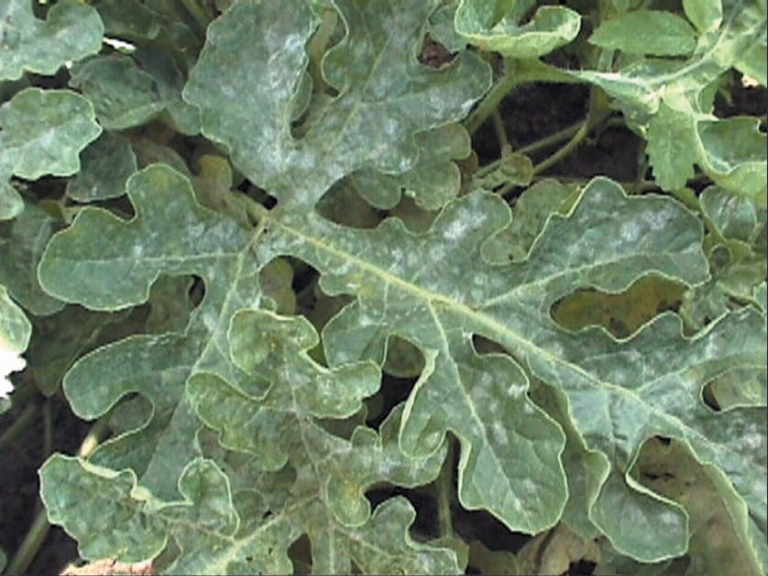
Powdery mildew is a scourge of gardens, both vegetable and ornamental. There are some simple steps you can take to prevent powdery mildew or get rid of it once it infects your plants.
What is Powdery Mildew?
Powdery mildew is caused by fungus that lives in the soil. Although it looks the same throughout your yard, powdery mildew is caused by many different types of fungus, each specific to a particular plant. Fortunately, different species of fungus cannot spread to different kinds of plants. For instance, the powdery mildew infecting your lilacs cannot infect your zucchini. They are caused by two different fungi.
Fungi grow best in humid weather and shady locations. It infects your plants but doesn’t kill them. It is unattractive in flowers and shrubbery. It is especially a problem in the vegetable garden because once infected, the leaves no longer photosynthesize (make food for the plant) so any fruit that is produced will be malformed and less flavorful.
How to Prevent Powdery Mildew

.jpg)
Plant flower and vegetable varieties that are resistant to powdery mildew.Plant breeders are always working on new plant varieties to better resist diseases such as powdery mildew. Check the labels on plants before you buy them or look for powdery mildew resistance in catalog descriptions when ordering seeds or plants.
Do not plant susceptible plants in the shade.Growing plants which are susceptible to powdery mildew in the shade encourages the growth of the fungi. Shade encourages moisture which in turn encourages the growth of fungi. Sunlight tends to dry out moisture, rendering the environment less hospitable to fungi.
Do not crowd your plants.Proper spacing encourages good air circulation between the plants. Air that is moving between plants carries the fungi away from the plants. When plants are crowded, the air does not move between the plants and the fungi is able to stay on the leaves and infect them.
Apply fertilizer or compost in steady quantitiesrather than in periodic large amounts because the fungi prefers the new fast growing shoots. Slow release fertilizer is best because it supplies the plants with small amounts of fertilizer throughout the growing season each time it rains or you water.
Avoid watering from overhead with sprinklers or handheld hoses.The force of the falling water will cause soil to splash onto your plants possibly infecting them if the fungi is present in the soil. Always water at the roots with a long handled watering wand or use drip irrigation.
Thoroughly clean up your garden in the fall.Fungi will over-winter in any garden debris that is left on the ground, emerging in the spring to infect your plants again. Remove all plant debris from your garden in the fall.
Sprays That Prevent Powdery Mildew
You can purchase sprays at your local nursery to prevent powdery mildew. They contain sulfur or potassium bicarbonate which will prevent fungi from growing on your plants.
You can make your own spray by mixing 1 teaspoon of baking soda and 1 quart of water. The baking soda raises the pH of the leaves so that the fungus can’t grow.
Whether you purchase a spray or make your own, you will need to reapply after it rains.
How to Get Rid of Powdery Mildew
Once your plants become infected, it is difficult to get rid of the powdery mildew. Try these methods:
Remove any infected plant material so that the infection doesn’t spread to other plants. Either throw it out or compost it. It is safe to compost infected plant material because the heat of the composting process kills the fungi that cause powdery mildew.
Use fungicide sprays made up of horticultural oils or plant based oils such as jojoba or neem oils, copper or potassium bicarbonate. They can be purchased at your local nursery or you can make your own fungicide spray. Mix 1 tablespoon of baking soda in a gallon of water and add ½ teaspoon of liquid soap.
Use a milk spray. Studies have shown that milk is effective in slowing the spread of powdery mildew on plants that are already infected. Mix 1 part milk to 9 parts water and spray on plants showing signs of powdery mildew. As with any spray, you will need to re-apply after any rain.
Powdery mildew is ugly but it won’t kill your plants. Prevention is always best because once it infects your plants it is difficult to get rid of it as well as stop it from spreading to other plants.
Leave a Reply