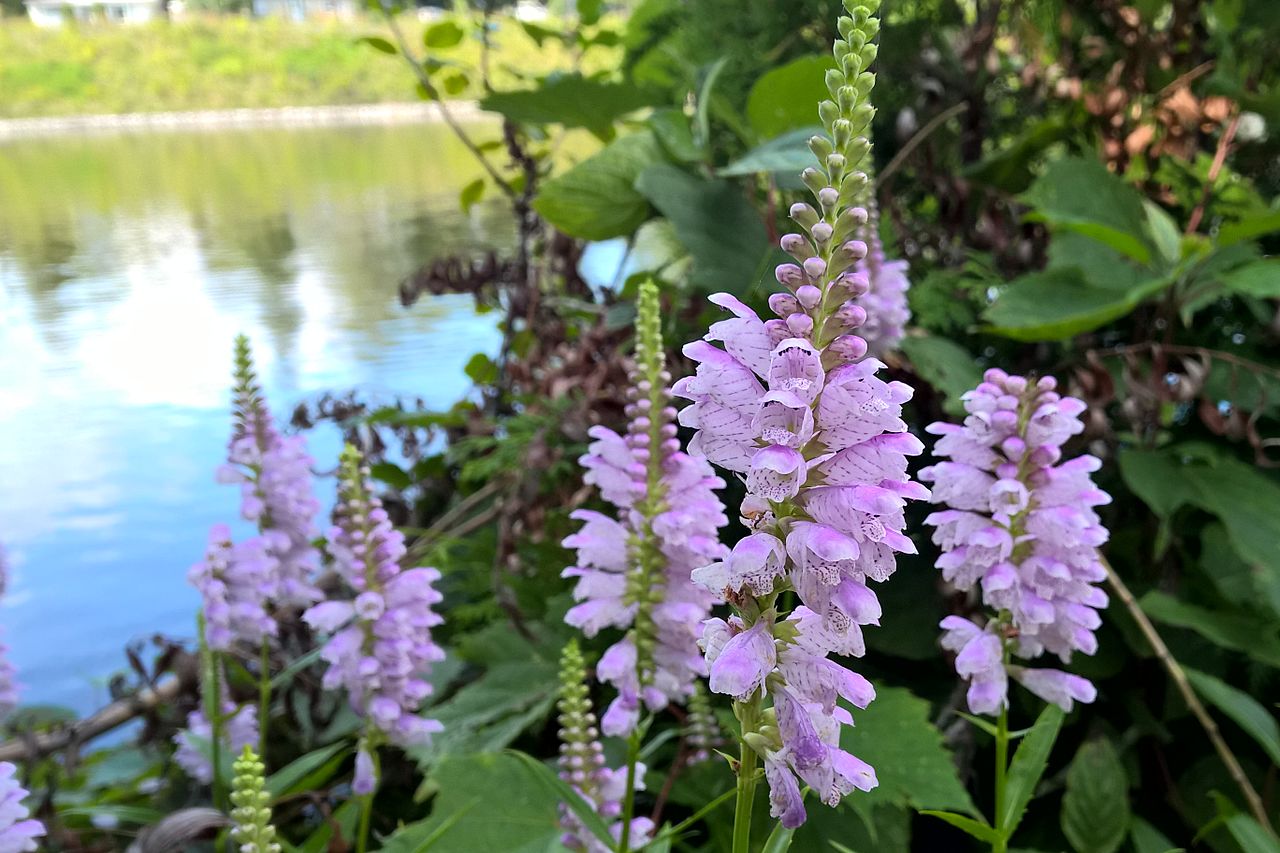
The first time that I saw an obedient plant, I fell in love. My friend though, warned me. It may be called obedient plant but it is anything but obedient and will take over your garden if you are not careful.
What is Obedient Plant?

Obedient plant (Physostegia virginiana) is a hardy perennial which is native to North America. It has a wide range stretching from Canada to northern Mexico. It is a member of the mint family and has the square stems that are characteristic of the mint family. Obedient plant also spreads quickly just like its mint cousins.
The plants are hardy in growing zones 3 – 10. There are two subspecies.
Physostegia virginiana ssp. praemorsa inhabits the southern portion of the US from Texas to Mexico. It prefers dryer conditions thriving on the prairies. It also lacks a rhizome.
Physostegia virginiana ssp. virginiana can be found further north. It prefers wetter environments like the banks of streams. It has clump forming rhizomes.

The plants are called obedient plants because if you bend one of the stems, it will stay in that position.
The plants are 3 to 4 feet tall and 2 to 3 feet wide. The leaves are 3 to 6 inches long and dark green. They are lance shaped with serrated edges.
The flowers look like the flowers of snapdragons even though they are not related. The resemblance inspired another nickname for this plant, False Dragonhead. The colors range from white to pink to lavender. The flowers appear in four rows on the flower stalks and open from the bottom of the stalk to the top. Bloom time is late summer into the fall.
Remove the flowers when they start to die to prevent the plants from forming seed. The seed will drop in your garden and sprout more plants.
How to Grow Obedient Plant
If you are brave enough to want to grow this pretty plant in your garden, you should be aware that it also grows from a rhizome that sends out underground runners resulting in new plants popping up all over your bed. They are easy to pull up.
If you don’t want to have to constantly be removing seedlings, you can cut the bottom out of a flower pot, sink it into the ground and plant your obedient plant in it. The sides of the pot will prevent the rhizome from sending out underground runners, while the open bottom will allow the plant’s roots space to grow.

Obedient plants grow best in clumps so that they can support each other without flopping over from the weight of the
flowers. Alternatively, you can stake your plants to keep them upright. Obedient plants do best in full sun. They will tolerate some shade, but tend to flop over. If you are growing them in partial shade, you will need to stake them.
They prefer moist, well-drained soil that is slightly acidic, pH 5.5 – 6.3 but are very forgiving. They will grow in just about any soil, even clay. If your soil is poor, don’t worry, it just means that your plants won’t spread as quickly.
Once established, obedient plants are drought tolerant, only needing to be watered during prolonged dry spells. A thick layer of mulch will help keep the soil moist.
There is no need to fertilize your plants. In fact, if you fertilize them they will spread more quickly than usual and take over your garden.
In the fall, resist the urge to cut down the plants. The dead foliage will act as a protection in the winter. As soon as you see the first sprouts in the spring, you can cut down the old foliage.
How to Divide Obedient Plants
If your clump of obedient plants is thinning out in the center and getting floppy, it’s time to divide the clump. Division should be done in the spring just as the plants are starting to show new growth.
Use a garden fork to carefully dig up your clump. Pull the rhizomes apart, discarding the old ones in the center and keeping only healthy ones from the outside of the clump. Discard any dead or diseased rhizomes.
Replant your divisions 2 feet apart. They will quickly fill in the space.
Leave a Reply