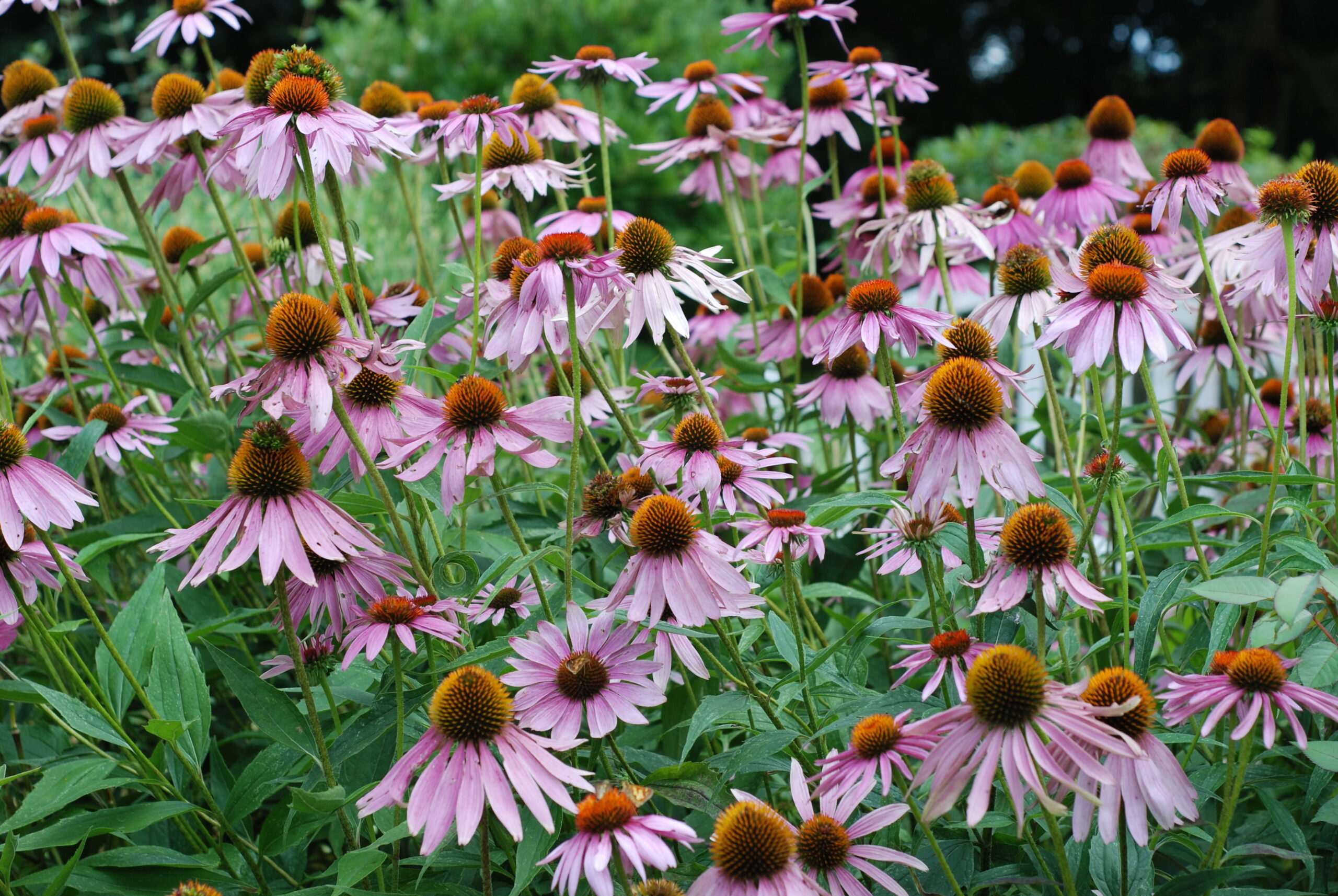
Do you grow purple coneflowers? If not, you should. They are easy to grow because they are native plants requiring little care. Bees and butterflies love them and if you can stand to leave the ugly blackened cones on the plants after the flowers die, finches will appear to snack on the seeds.
What are Purple Coneflowers?
Purple coneflowers (Echinacea purpurea) are one of ten species of Echinacea, a native family of flowering perennial plants. Unlike their cousins which are native to the prairies and dryer regions of the US, purple coneflowers are native to the moister eastern woodlands. They are drought tolerant but instead of the long taproots found in many prairie plants which grow deep into the soils in search of moisture, E. purpurea has a thick root mass that spreads out in search of moisture.
Native Americans had many medicinal uses for the plants. They used them to treat bites from insects and snakes, toothaches, sore throats, digestive upsets and cough.

Purple coneflowers are hardy in zones 3 – 9. The plants grow 2 to 4 feet tall and 1 to 2 feet wide. The leaves are dark green and rather stiff.
The flowers on the native species are purple to pink. Plant breeders have been working with the blooms and they now come in a variety of colors. Just remember that seed from these hybrids will not produce plants with flowers that are the same color as the parents. The native specie’s seeds will grow plants that are identical to the parent plants. Bloom time is quite long – mid-summer through fall.
If you leave the spent flowers so that they produce seed, you will attract birds, especially finches. Any seeds that are not eaten will fall to the ground and germinate the following year. These plants readily self-sow in your garden if you allow them to. They are not invasive, however.


How to Grow Purple Coneflowers
Most gardeners purchase their purple coneflowers as plants from their local nursery. Plant them 1 to 3 feet apart.
They grow best in full sun (6 to 8 hours per day) but will tolerate partial shade. When grown in shady locations, the flowers tend to flop so you may want to stake them.
Coneflowers like well-drained soil with a neutral pH 6.5 – 7.0. They are drought tolerant plants so avoid planting them in clay (which doesn’t drain) or in a wet spot in your yard. Too much moisture will result in the roots rotting.
The first year you plant them, keep them well-watered, about 1 inch of water per week. After that, you will only need to water them during prolonged periods of drought.
As native plants, coneflowers don’t need to be fertilized. If you do fertilize them, it will make them tall, leggy and weak. Just work some compost into the soil every spring. That is all the nutrients that they need.
How to Divide Purple Coneflowers
You will need to divide your coneflowers every 3 to 4 years. It’s better not to do it more often than that because they don’t like their roots to be disturbed. Division can be done in either the spring or the fall. Use a garden fork to gently dig up your plants. Then you should be able to just pull them apart into divisions. Discard any dead or diseased divisions. Plant the remaining ones 1 to 3 feet apart.
How to Grow Purple Coneflowers From Seed
Purple coneflowers are easy to grow from seed. That’s how I start mine. They need a period of cold, so the
easiest way to grow them from seed is to start them outdoors. Sow your seeds ¼ inch deep in your garden in the fall. They will germinate the following spring.
You can also start your seeds indoors 10 to 12 weeks before your last frost. They still need that period of cold winter weather though. Sow your seeds ¼ inch deep in a container filled with pre-moistened soil. I always water my soil before I plant my seeds because I’ve found that if I water afterwards, both the soil and the seeds tend to wash away.
Cover the container with a plastic bag and put it in your refrigerator for 8 to 10 weeks. This will mimic winter. Keep an eye on your container to make sure that the soil doesn’t dry out. Moisten it with a mister if necessary. After 10 weeks, remove the container from your refrigerator and the plastic bag and set it on a sunny windowsill.
The seed should germinate in about two weeks. You can plant your seedlings outdoors after your last frost when they have their second set of true leaves. Plant them 1 to 3 feet apart.
Leave a Reply