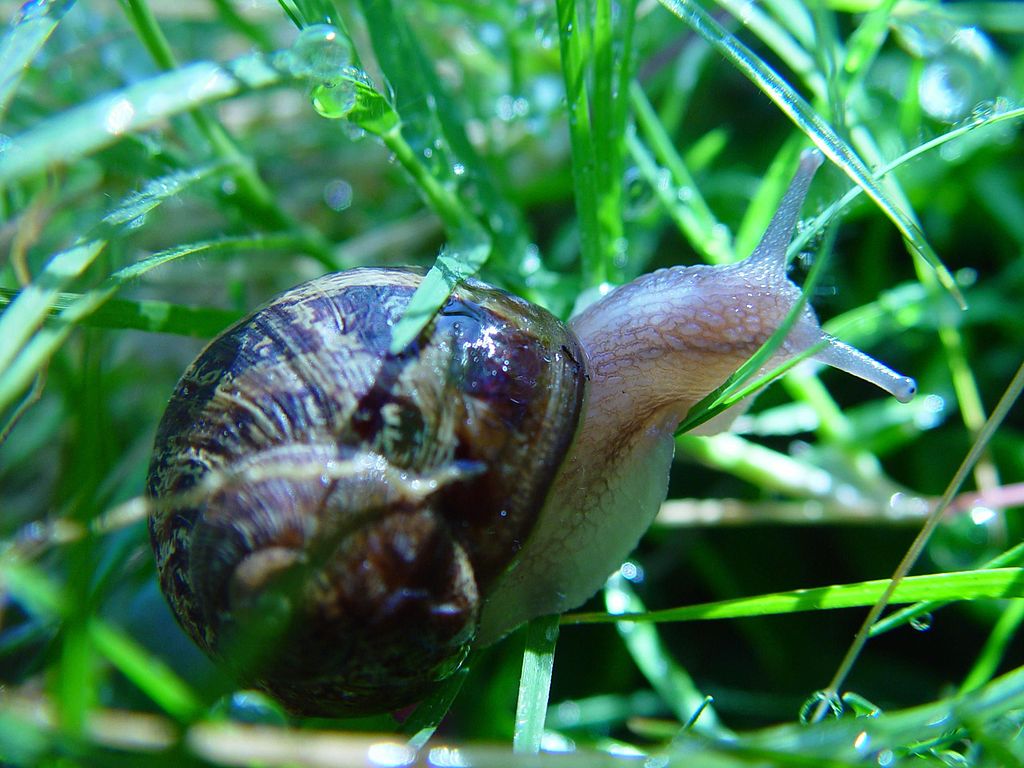
If your garden has slimy trails and your plants have holes in their leaves, you’ve got slugs or snails. You probably won’t see them in action. They are active mostly at night. Getting rid of them is fairly easy.
What are Slugs and Snails?

Slugs and snails are mollusks, related to octopus, squids, clams and oysters. They belong to a sub-group of mollusks called gastropods which includes snails, conch and abalone. Slugs are similar to snails but without external shells. They move using a “foot” which is a thick muscle that secretes mucus to help the slug move through your garden.
Both slugs and snails are hermaphrodites. They contain both male and female reproductive organs so they don’t need to mate. Depending on the species, slugs reach maturity at 3 to 6 months and start laying eggs in batches of 30 to 40 in protected areas underneath leaves or in cracks in the soil. Snails mature in 2 years and lay an average of 80 eggs up to 6 times per year.
Do a Garden Clean-up to Get Rid of Slugs and Snails
The best thing you can do to rid your garden of slugs and snails is to clean it up. Both mollusks are active at night and during cool, overcast days. They avoid the sun and the heat, hiding under leaves and garden debris. Cleaning out all the leaves and debris in your garden robs them of places to hide during the day. If they can’t safely hide, they will move on to a more hospitable garden.
Use Baits
It’s best to use an organic bait containing iron phosphate which is iron and phosphate combined with oxygen and is used in fertilizers. The slugs and snails eat it and die within a few days. You will see immediate improvement in your plants because the slugs and snails stop eating after consuming the bait. They will hide away to die so you won’t see a lot of dead bodies in your garden. Any unused bait will decompose in your garden and act as a fertilizer. This bait is safe for children and pets.
Another type of bait, containing metaldehyde, is NOT safe for children and pets and is not recommended.
Create Barriers
Copper is a common barrier used to keep slugs and snails out of gardens. The metal reacts with their nervous systems giving them the feeling of an electric shock. You can place flat bands of copper along the top edges of your raised beds or around your plants. If you are using an upright copper barrier, be sure that it is wide enough to be buried at least 2 inches in the ground to prevent slugs and snails from going under it.
You will often see diatomaceous earth recommended as a good barrier. It is made up of the skeletons of diatoms that lived in ancient seas that dried up eons ago. The skeletons are ground into a white powder that has sharp edges that will tear up the underside of slugs and snails that crawl on it, killing them. While it is effective, I have two objections to it. First, because it is mined, it is not a renewable resource. And secondly, it is very expensive.
My preferred substitute is eggshells. If you are not already using them in your compost, wash your eggshells, crush them and put them around your plants. The sharp pieces of shell injure and kill slugs and snails as effectively as diatomaceous earth without the cost. Plus eggshells are biodegradable, adding needed calcium to your garden soil.
Use Traps
Trapping slugs and snails is easy. Simply use a board, an empty flower pot or citrus rinds. Prop them up
approximately an inch off the ground. Slugs and snails will hide underneath them during the day. You just take up the trap, scrape the mollusks off into the garbage (or your composter) and then replace them to trap some more.
I’m seeing a lot of “experts” on the internet advising against beer traps. Beer traps have always been successful for me. You take small containers such as bowls, bury them in your garden up to the rim and then fill them with beer. The smell of the beer attracts slugs and snails. They crawl in and drown. I just empty mine out into my composter each day and rebury and refill for the night. I’ve trapped up to a dozen slugs per bowl per night.
Hand Pick Slugs and Snails Off Your Plants
If you have the time and patience, you can pick slugs and snails off the plants in your garden. During the day, you can hunt for them under leaves and other garden debris. At night, you want to use a flashlight to find and pick them off your plants. If you are like me and don’t want to touch them, wear gloves or use tongs to pick them up. You can either bag them or squish them or both and dispose of them in your garbage or composter.
Use Poultry to Eat Slugs and Snails
Poultry such as chickens, ducks and geese love to eat slugs and snails. If you raise poultry, or have a neighbor who is willing to lend you their flock for a few hours in the evening, you can set up a temporary pen around your garden and allow the birds to help themselves to an evening snack. As a bonus, the poultry droppings will fertilize your garden while they are ridding your plants of pests.
An infestation of slugs and snails can destroy your garden. There are some simple, organic methods of getting rid of them.
Leave a Reply