A friend emailed me asking for help with a gardenia houseplant that she had been gifted. It wasn’t doing well. She had researched the plants but couldn’t find any answers. Did I have any idea what might be wrong with her plant? This was a no-brainer. Gardenias need acidic soil and her plant was most likely growing in regular potting soil with a neutral pH. I told her to buy some Miracid to lower the pH of the soil.
Miracid has been around for years and is the most popular product on the market for acid loving plants. It’s my go-to recommendation for lowering the pH of soil for indoor plants.
What are Gardenias?
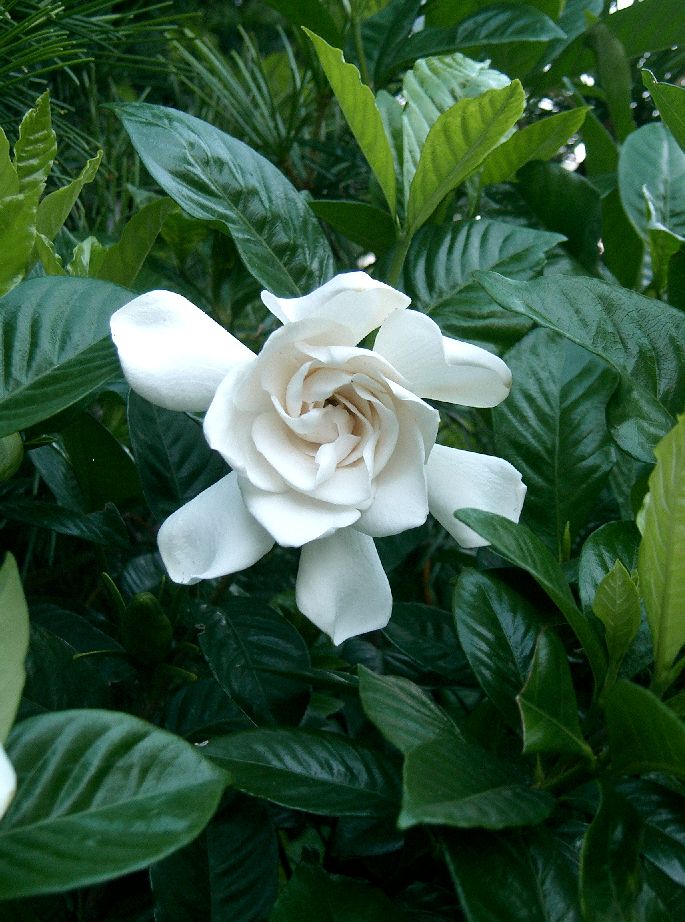
Gardenia (Gardenia spp.) is a genus of small flowering trees and shrubs that are native to Africa, Madagascar, Asia and the Pacific Islands. They are related to coffee trees. They are popular because of their fragrant flowers. The different species of gardenia range in size from 3 to 50 feet tall. The flowers, usually white or cream color, also differ depending on the species. They can be single or double and as small as 2 inches across or as large as 4 inches across.
The most popular gardenia species is G. jasminoides. These are evergreen shrubs that usually only grow to 6 feet. They are hardy in zones 7 – 11. Gardeners in colder climates grow them indoors as houseplants. When grown as houseplants, they usually only attain a height of 18 inches.
Their glossy dark green leaves are evergreen meaning they don’t die and fall from the trees in the fall. They stay green and healthy year-round. The flowers are white. They are among the larger gardenia flowers, being double and about 4 inches across. Bloom time is summer through early fall.
How to Grow Gardenias Outdoors
If you live in growing zones 7 – 11, you can grow gardenias outdoors. As previously mentioned, these
trees need acidic soil with a pH between 5.0 and 6.5. You should have a soil test done on the soil where you plan to plant your shrubs. A soil test will determine not only the pH of your soil, but also the nutrient content of the soil. If done in a professional soil lab, your results will also have suggested amendments to add to your soil to enhance its fertility.
Ideally you should have your soil test done 6 months before you plant your shrubs to give the amendments, including the acidifying one, a chance to work their way through your soil.

Gardenias love the sun, but need protection in warmer areas from too much sun. Try to plant your shrub where it will get morning sun and partial shade in the afternoon.
These shrubs need 1 inch of water each week. If your area is going through a drought period, water your shrub weekly to make sure that it is getting that critical 1 inch of water.
Gardenias should be fertilized twice a year with a slow-release fertilizer that is formulated especially for acid loving plants. Apply it the first time in mid-spring and then again approximately 6 weeks later in mid-summer. No matter how tempting, do not fertilize your tree in the fall. When you fertilize, it encourages the tree to produce new growth. New growth in the fall will not have enough time to harden off before winter, so it will die.
How to Grow Gardenias Indoors
Those of us in colder climates have to grow our gardenias indoors as houseplants, only moving them outdoors temporarily during warm weather. They are notoriously difficult to grow indoors but with a little care, you can be successful.
There are potting soils that are specifically formulated for acid-loving plants like gardenias. Make sure you use one when potting or repotting your shrub.
Light and humidity are the biggest stumbling blocks to successfully growing gardenias indoors. Our homes are not light enough for sun loving plants. If you have a sunroom or greenhouse, grow your shrub there. That way they get sunlight on all sides instead of just one side as they would in front of an ordinary window.

Our homes are not just too dark, they are also very dry from a plant’s point of view. We have dehumidifiers on our HVAC systems to prevent mold from growing. You will need to provide extra humidity for your tree. Purchase a humidifier and place it nearby. Misting alone will not provide enough humidity.
And don’t forget to water! The soil will need to be kept moist. Don’t allow it to dry out. Consistent watering is key.
Fertilizer is especially important for plants grown in pots because every time you water, the water leaches nutrients out of the soil. You need to replace those nutrients. Either use a slow release fertilizer or fertilize your tree every two weeks with a water soluble fertilizer. Use a fertilizer that is formulated specifically for acid-loving plants, such as Miracid.
You can move your gardenia outdoors in the spring when the night time temperatures are consistently above 60⁰F. Move it back indoors in the fall when the night time temperatures fall to 60⁰F. Gardenias are very sensitive to cold temperatures so when it is indoors make sure that it is out of the way of any cold drafts.
Another spring chore: repotting your tree before you move it outdoors. They usually need to be repotted every two years.

How to Prune Gardenias
Whether grown indoors or outdoors, gardenias benefit from regular pruning. Prune your tree after it finishes blooming. This is because the buds for next year’s flowers form this year. If you prune your tree in the spring before it blooms, you risk cutting off buds so you will have few or no flowers.
Make sure you first prune away any dead or diseased branches. Then you can prune to shape your tree or manage its size.
Leave a Reply