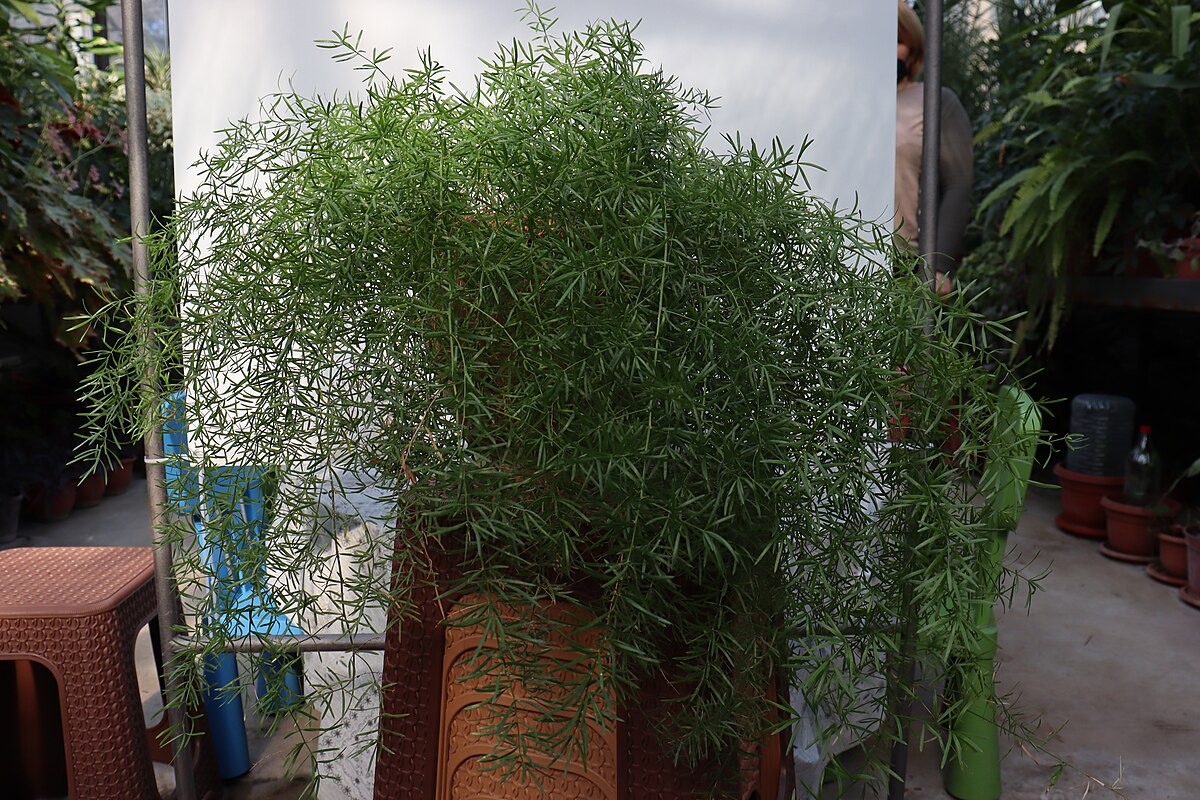
If you remember the seventies, then you remember fern bars. For everyone else, fern bars were upscale bars where upscale young people went to see and be seen. As the name implies, the main ornamental item were large ferns. Ferns were popular in that era as houseplants. The most popular of them was the asparagus fern.
What are Asparagus Ferns?

The asparagus fern (Asparagus aethiopicus) looks very much like an asparagus plant and like asparagus is a member of the lily family. It is not a true fern. Its “fronds” are actually long stems with needle-like leaves. Unlike true ferns which grow from stolons (runners), asparagus ferns grow from underground tubers. They also flower, something else you won’t find on a true fern. The flowers produce berries that are first green, then turn red when ripe. Birds love them and help asparagus ferns spread by eating the berries and then excreting the indigestible seeds, usually far away from the original plant. Each berry contains 1 to 3 seeds.

The berries should not be eaten by humans. If eaten, they can cause vomiting, diarrhea and abdominal pain. The plants are also toxic for dogs and cats so you might want to either not grow them or hang them high enough that your pets can’t reach them.
Are Asparagus Ferns the Same as Foxtail Ferns?
Asparagus ferns are nicknamed foxtail ferns. However, that causes confusion because the foxtail fern (Asparagus densiflorus), although related, is a different species and looks very different. It grows upright rather than sprawling. Its branches look like fox tails, hence its name. Asparagus ferns look like asparagus.
How to Grow Asparagus Ferns Outdoors
Asparagus ferns are easy to grow. They are hardy in zones 9 through 11 where they can be grown outdoors year round. They are native to South Africa which is very dry so it is not surprising that they are drought tolerant. They work well in xeriscapes because they need so little water. Plant them in rich, well-drained soil and water sparingly. Fertilize monthly with a balanced fertilizer. Asparagus ferns grow best in dappled shade but can tolerate full sun. If grown in sun, the plants tend to be bushier and more compact rather than sprawling. In a shadier location, try planting them along the tops of walls where they can trail over the edge. You will need to divide your ferns every three years to prevent them from crowding out surrounding plants. The plants are not bothered by diseases or insects. They are so hardy that they are considered invasive weeds in Florida, Texas, Hawaii and New Zealand where they crowd out native plants.
How to Grow Asparagus Ferns Indoors

North of zone 9, asparagus ferns should be grown in containers and brought indoors during the winter. Use regular potting mix in the containers and place them in a semi-shady area outdoors. Indoors, they prefer indirect light or a north facing window. Fertilize your containers weekly with a weak fertilizer. Water regularly because containers dry out quickly. Bring your ferns indoors before the first frost in the fall. Keep them indoors until all danger of frost has past in the spring. Make sure that the room they are in is not too warm. Asparagus ferns prefer cooler temperatures. The room should be between 55°F and 70°F. They like being pot bound but you will have to divide them every two years because the mass of tubers will fill the container and prevent proper drainage. These ferns prefer to be dry, so if the soil in which they are planted doesn’t drain properly, they will literally drown. When dividing your plants, replant each clump of tubers in the same size container that they were in previously so that they can “grow into” them, rather than in a smaller container which they will quickly outgrow.
How to Grow Asparagus Ferns From Seed
Asparagus ferns are easy to grow from seed. The seeds do require a bit of preparation. The seed coat is very hard so that it will survive its trip through birds’ digestive tract. You will need to soften it before planting.

Harvest the berries when they are red and ripe. Remove the fleshy part of the berry, leaving just the seed or seeds. Knick the seeds with a knife or rub them with sandpaper being careful not to harm the embryo. Then soak the seeds for at least 24 hours.
Now your seeds are ready to be planted. Use the same soil you use for growing them in containers. Plant the seeds 1/4 inch deep. Gently mist the soil until it is moist and then cover with plastic wrap to keep it moist.
Germination should occur in 3 to 4 weeks. As soon as your seeds have germinated, remove the plastic wrap. When the seedlings develop their true leaves, they are ready for new homes. You can transplant your seedlings into containers or plant them outdoors if your climate is warm enough.
Other than in xeriscapes, you don’t see asparagus ferns much since their heyday decorating fern bars in the seventies which is a shame because they are so easy to grow and make gorgeous houseplants. No one, I’m sure, misses fern bars.
Leave a Reply