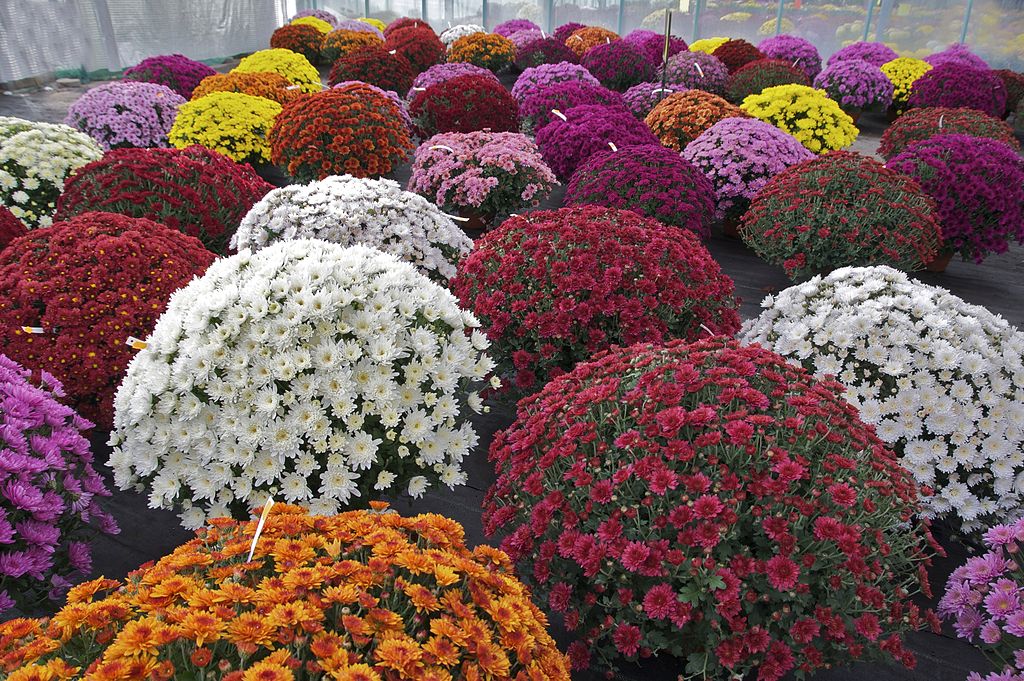
You know fall is approaching when the mums appear in the local nurseries. This classic fall bloomer has been a symbol of the fall season for almost as long as we have been a nation.
A Short History of the Chrysanthemum

Wild chrysanthemums are native to Asia and northern Europe. They were first domesticated in China 15 centuries ago. It is unknown how long there was a breeding program, but by 1630 there were over 500 recognized cultivars. The domesticated chrysanthemum (Chrysanthemum indicum) was introduced to Japan in the 8th century AD where it became such a favorite of the emperor that he made it his symbol. Chrysanthemums reached our own shores from England in 1798, brought here by a Colonel John Stevens.
What are Chrysanthemums?

Chrysanthemums are perennial herbaceous plants which are photoperiodic meaning that the length of the day determines when they bloom. When the nights reach ten hours long, they begin to produce buds. Within 6 to 8 weeks, they will start to bloom.
Mums like the cooler weather of fall. Lower temperatures result in more intense flower color and longer lasting flowers until a hard frost kills the plant (but not the roots).
Although we have a preference for autumnal hues, chrysanthemum flowers come in every color except blue. The blossoms range in shape from daisy to tightly compact pompoms and buttons, to more loosely arranged petals and spikes. The plants themselves are divided into two types, the hardy mums that we grow in our gardens and the exhibition type with their exaggerated flowers. The plants are also grown as standards (trees), topiary and bonsai.

How to Grow Chrysanthemums
Hardy mums are truly hardy. They can be grown in zones 3 through 9. Most people grow them as annuals, purchasing budded plants in containers in the fall and then discarding them after the first hard frost. With a little care, mums can be grown as a perennial in your garden to return year after year.
Mums will grow in part shade, but prefer full sun. If you want the maximum number of flowers on your mums, grow them in full sun which is defined as 6 to 8 hours of sun each day. They prefer a more alkaline soil, pH 5.7 – 6.2, which must be well-drained. They are also heavy feeders, so be prepared to fertilize them with a 5-10-10 formula fertilizer every three to four weeks throughout the growing season. Water your plants regularly. Mums have shallow roots and can dry out quickly.

After the first killing frost, resist the urge to remove the dead vegetation from your plants. As ugly as it is, leave it in your garden throughout the winter to protect the crown and roots. You will be rewarded with new growth, i.e. new leaves in the spring at which time you can finally get rid of the ugly dead foliage. If your winter is cold and snowless, it’s a good idea to mulch around your plants to provide protection. Mums have very shallow roots which can heave up out of the ground during the winter freeze/thaw cycles. If this happens, simply push the heaved rootball back into the soil. You can even do it by lightly stepping on it. Don’t step on the plant, though, just the rootball.
Like your other perennials, mums should be divided every three to four years. Division is best done in the spring so that the resulting plants with have time to develop their root system before they devote their energy to making flowers in the fall.

How to Get the Most Flowers on Your Chrysanthemums
To achieve the densely flowering plants that you see for sale in the fall, you will need to “pinch” your plants. Pinching means cutting off the growing tips of each branch which will force the plant to grow more branches. This can be done with pruners, but most gardeners just use their thumb and forefinger to pinch. More branches means more flowers. You can start pinching your plants when they reach a height of 6 inches for the larger varieties, 4 to 5 inches for smaller varieties. Pinch them every 3 to 4 weeks until the Fourth of July. After that, keep them watered and fertilized to enjoy a fabulous fall display.
How to Grow Chrysanthemums From Cuttings and Seeds

Chrysanthemums can be grown from cuttings from existing plants. Make your cutting at least 4 inches long, ensuring that it has leaves. Place the cutting in a soilless mix and keep it outdoors in a sunny spot until it develops roots at which time you can transplant it into a small container filled with regular potting soil. Fertilize it every week for two or three weeks, then plant it directly into your garden. It should flower in the fall.
Mums can also be grown from seed. Start your seeds indoors 6 to 8 weeks before your last frost. Cover them with 1/8 inch soil and keep moist. Germination should occur in 2 to 3 weeks. You can transplant your seedlings into your garden after your last spring frost.
Leave a Reply