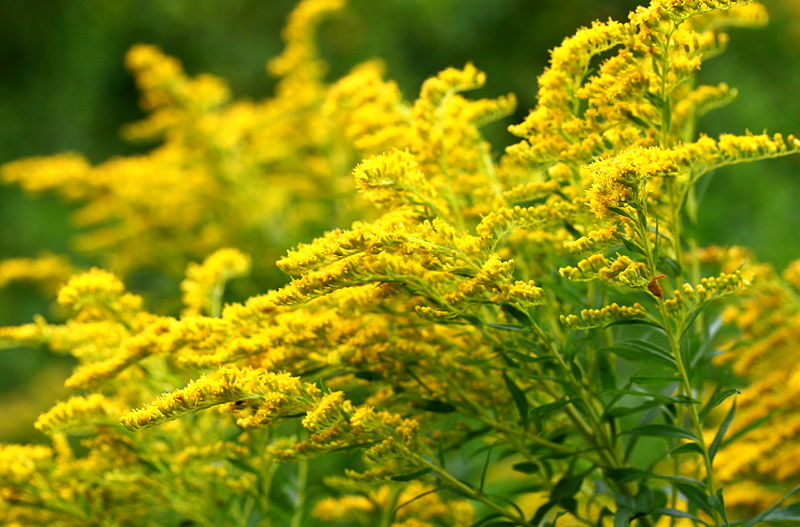

Goldenrod should be one of the classic flowers of fall but it gets a bad rap because it blooms at the same time that hayfever sufferers begin sneezing. Ragweed flowers, which are the real culprits, are tiny so it is the showy goldenrod that gets blamed for the suffering. Ragweed pollen is spread by the wind. Billions of tiny pollen particles are released into the air in search of flowers to pollinate. Goldenrod, on the other hand, has larger, sticky pollen that adheres to visiting insects that fly on to pollinate other goldenrod flowers. The only way to get a noseful of goldenrod pollen is to actually stick your nose into the flowers. Ironically, it is florists who suffer from goldenrod allergies because they handle the pollen-filled flowers indoors when creating fall arrangements. The stiff stems of the goldenrod make them ideal for flower arrangements.
How Did Goldenrod Go From Weed to Garden Flower?
Goldenrod has an interesting history thanks to the intrepid British plant collectors and plant breeders. A native wildflower that still blooms in our meadows, goldenrod was sent to England where there was intense interest in the native plants of the newly settled New World by English gardeners. English plant breeders converted goldenrod from an invasive weed to a more mannerly garden flower with showier flowers and varying heights which lends it versatility in the garden. English gardeners eagerly embraced these new exotic plants in their gardens.
These “new” plants were then transported back to North America where they are now sold in nurseries and catalogs. Because of the deep-seated bias against goldenrod, it did not become popular here in the US until the 1980s. Prior to that, it was only used in wildflower gardening.
Fun Facts About Goldenrod
It is the state flower of Kentucky and Nebraska
It is the state wildflower of South Carolina
It is the state herb of Delaware
What is Goldenrod?

Goldenrod is a perennial that is native to North America. The domesticated plants are hardy in growing zones 4 through 9. The wildflowers have a wider range and are hardy from growing zone 2 in Canada to zone 8 in the southern US. They both prefer full-sun but will tolerate some shade. Both the wild and domesticated plants are drought tolerant, making them excellent candidates for xeriscapes. In your garden, they require well-drained soil. The new cultivars range in height from 1 to 3 feet depending on the variety. The wildflowers are taller and range in height from 4 to 5 feet. Regardless of height, all bloom in the fall. The flowers attract both beneficial insects and butterflies. After the plants die back in the fall, you should cut them down to the ground and remove the dead plant material from your garden to prevent insects and disease from overwintering in the debris.
How to Grow Goldenrod From Seed
Growing goldenrod from seed is easy. Purchase your seed from a reputable dealer so you know that you are getting the domesticated goldenrod. It is not advisable to collect seeds from wild goldenrod to grow in your garden because it will become invasive and take over your garden, crowding out the other plants.
You can start the seeds indoors 6 to 8 weeks before your last frost date or outdoors in either the spring or the fall. In the spring, sow the seeds outdoors after your last frost. No matter when or where you are starting your seeds, be sure to surface sow them. Don’t cover them with soil. They need sunlight to germinate. Keep the seeds moist until germination. Germination should occur in 2 to 3 weeks. Be patient. Perennial seeds always take much longer to germinate than annuals.
If you have sown your seeds outdoors in the fall, do not expect them to germinate until the following spring when the increasing amount of sunlight tells them that it is time to grow. Don’t worry about keeping them moist. Mother Nature will take care of that for you. And don’t worry about the seeds dying during the cold winter. In the wild, the plants bloom in the fall and produce seeds that will lay dormant on the soil until the following spring.
Seedlings that were started indoors can be hardened off and planted outdoors after your last frost. Hardening off is the name of the process of acclimating your plants to the outdoors. Instead of just taking them outdoors and immediately planting them in your garden, you want to allow them to gradually adjust to being outdoors with the varying temperature, wind and strong sunlight. Put your seedlings outdoors for a few hours a day, increasing the amount of time each day that they spend outside until they are outdoors all day. Then you can plant them in your garden.
How to Grow Goldenrod From Cuttings
Perennials like goldenrod should be divided every 3 to 4 years to keep the plants healthy. For fall bloomers like goldenrod, division is done in the spring. If you know a gardener who has some in their garden and they are dividing their plants, you can ask them for one of their divisions.
Goldenrod also spreads underground via runners known as underground rhizomes. That’s why you see it popping up at a distance from your existing plants. You can sever that runner and transplant the resulting plant to another location or share with fellow gardeners.
This habit of spreading via runners contributes to the plant becoming invasive in your garden. Even the more mannerly domesticated varieties spread rapidly so you might want to treat them like you treat bamboo and surround them with a 3 feet deep barrier to keep them under control.
Never Plant Wild Goldenrod in Your Garden
Don’t be tempted to dig up some wild goldenrod and transplant it into your garden. These wildflowers are aggressive spreaders and will crowd out domesticated garden plants. They are accustomed to fighting for space with agressive weeds. Your tender domesticated flowers are no match for them and will rapidly succumb to them.
Leave a Reply