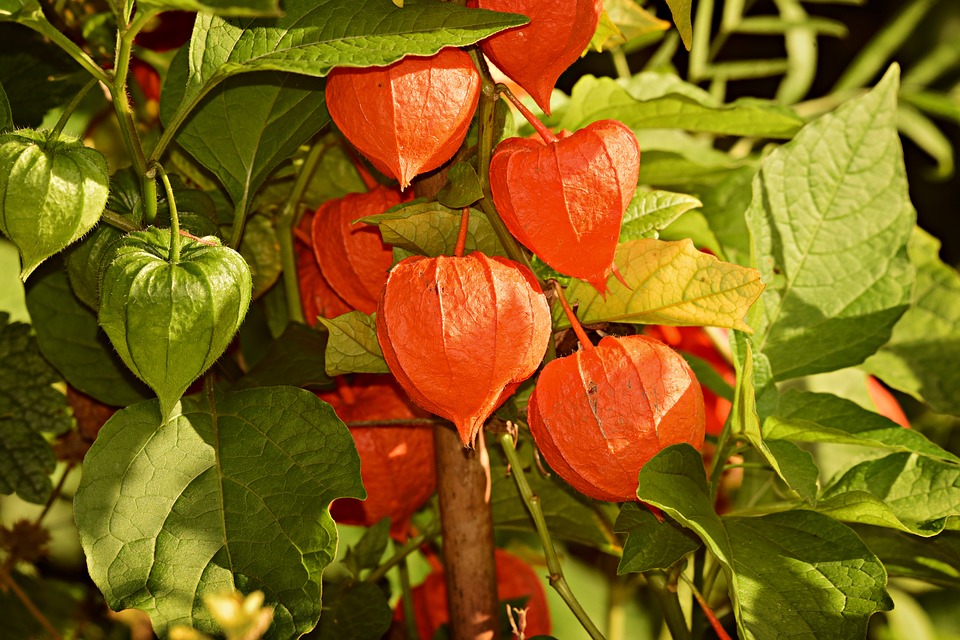
What are Chinese Lanterns?

Chinese lanterns (Physalis alkekengi) are perennial plants that are a member of the nightshade family, which includes tomatoes, potatoes, eggplants and peppers. Chinese lanterns are most closely related to the Cape Gooseberry. The plants are native to a wide area of the world ranging from Southern Europe to Southern Asia. Here in the US, they are hardy in zones 3 – 9. They are grown for the colorful coverings of their fruit which turn orange when mature, resembling Chinese lanterns.

Chinese lantern plants are large, 2 feet tall and 3 feet wide, and invasive. They spread both by seed and by underground runners, often popping up in other areas of the garden. They can be grown in containers so gardeners often plant them in containers and then sink the containers into the ground in their gardens to prevent the plants from spreading. Another solution would be to use a barrier around the root ball similar to what you would use to contain the spread of bamboo.
The leaves are heart shaped. The flowers are white and very small. Bloom time is late summer. After they are pollinated, they produce berries which contain seeds. A pod surrounds the pollinated flowers and then the berries. The pod starts out green and by late fall, turns orange. The pods can be dried and used in fall arrangements.
How to Grow Chinese Lanterns
Chinese lantern plants should be planted in full sun except in hot, southern areas where they prefer a little shade in the afternoon. Plant them in well-drained soil. One inch of rain or watering to a depth of one inch per week is best. Apply a thick layer of mulch to help the soil retain moisture and discourage weeds. Chinese lanterns do not compete well with weeds which will aggressively grab the nutrients and water in the soil.
Plant your Chinese lanterns at least 2 feet apart. This allows for good air circulation. The plants are prone to a lot of diseases such as powdery mildew, black rot and various viruses. Overcrowding encourages the growth of disease so proper spacing is critical.
The plants also attract a lot of insect pests. The most effective treatments to prevent insect infestations are neem oil or insecticidal soaps. Personally, I use neem oil. It is non-toxic for pets and has a half-life of only one to two days making it safe to use on edibles. I grow both vegetables and herbs. My herbs are used in cooking so it is important to me to not use toxic chemicals on them. My favorite neem oil is organic neem oil. I use it on my plants, both indoors and outdoors. I also use it in my bathroom to combat mold. It is not only effective, it also acts quickly. Normally natural products take a while to show results, but the neem oil begins working within 24 hours.
How to Prune Chinese Lanterns
Chinese lanterns are perennial so they will need pruning. In the fall, the plants die to the ground. Using your pruners, cut down all of the dead plant material and compost it. You don’t want to leave any debris in your garden because many insect pests hibernate through the winter in plant debris.
In the spring when the plants start growing again, prune away any dead stems that may be left over from the previous year. During the growing season, if your plants become too leggy, meaning that the plants are very tall and scraggly, cut them down to the ground for a fresh start. By removing all of the stems, you are encouraging new growth. The plants will re-grow from the roots.
How to Grow Chinese Lanterns From Seed

Most gardeners grow Chinese lanterns from seed because it’s very easy. You can direct sow the seed in your garden after your last frost. Surface sow the seeds. Don’t cover them at all because they need light to germinate. Germination should occur in 2 to 3 weeks. Keep in mind that perennial seeds take longer to germinate than seeds for annual plants.
The seeds can also be started indoors 6 weeks before your last frost. Surface sow the seeds because they need light to germinate. Keep the soil at 70⁰F to 75⁰F. A heat mat can keep the soil warm. Don’t overwater, just keep the soil evenly moist. Germination should occur in 2 to 3 weeks. You can transplant your seedlings into your garden after your last frost. Be sure to space them at 2 feet apart to allow for good air circulation to prevent disease.
How to Harvest Chinese Lanterns
Chinese lantern pods ripen to orange in late fall. When the pods turn orange, cut the stems as close to the ground as you can. Strip all of the leaves off of the stems and just leave the orange pods. Tie the stems together in small bunches of not more than 6 and hang them upside down somewhere that is dry, dark, and has good air circulation. You want it to be dark because sunlight will fade the colors of the pods. You want it to be dry so that the pods don’t get moldy. And you want good air circulation to prevent mold spores from settling on the pods and ruining them. A soft breeze through the area will keep those spores moving along! A well-ventilated attic is good or even a shed or garage will work as long as you hang your stems well away from any windows. The pods should be dry in 2 to 3 weeks.
Leave a Reply